
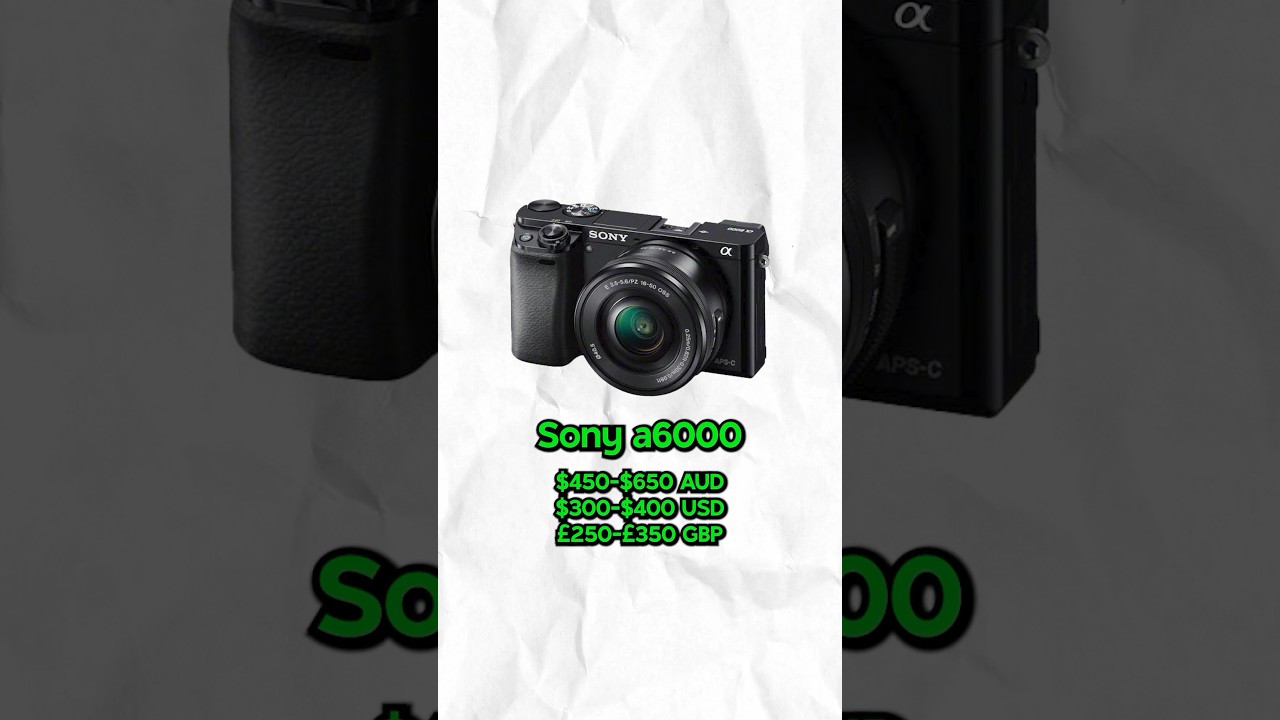
The Best Entry Level Camera – Photography Tips (Sony a6000) #photography #carphotography from Life Through Optics gives you a friendly, no-nonsense look at why the a6000 is a standout choice for beginners. You’ll get clear explanations of key features and examples that show how this camera performs in real shooting situations.
The piece outlines essential settings to master, lens choices that work well for car photography, composition and lighting pointers, and a simple post-processing workflow to refine your shots. Follow these tips and you’ll be ready to pick gear, plan shoots, and capture crisp, dynamic car images with confidence.
Overview of the Sony a6000 as an entry-level camera
You pick up the Sony a6000 and it feels like a small, serious object — not a toy, not a phone, but something that asks you to look. It was introduced as a bridge between point-and-shoot simplicity and the deliberate practice of interchangeable-lens photography. For you as an entry-level shooter it offers surprisingly modern performance, a hands-on learning experience, and room to grow without asking you to mortgage your tastes.
What the Sony a6000 offers new photographers
You get a compact body, an APS-C sensor with good resolution, and a hybrid autofocus system that feels responsive in real use. The electronic viewfinder shows exposure and color before you press the shutter, and the menu lets you make meaningful choices without feeling lost. For someone new to mirrorless, the a6000 hands you speed, clarity, and feedback — the sort of feedback that turns accidental good shots into repeatable technique.
Who benefits most from the a6000 (hobbyists, enthusiasts, car photographers)
If you’re a hobbyist or an enthusiast, the a6000 gives you room to learn lenses, lighting, and composition without overwhelming cost. Car photographers, in particular, will like the camera’s autofocus speed, burst mode, and the breadth of lenses available for E-mount — it’s small enough to carry around car meets and light enough to lug on location, yet powerful enough to capture details, reflections, and motion. If you’re trading up from a smartphone or an older DSLR, you’ll notice the jump immediately.
Strengths compared to smartphone and basic DSLRs
Compared to smartphones, you’ll find cleaner images at higher ISOs, better background separation with wider apertures, and more creative control over focal length. Against basic DSLRs, the a6000’s strong autofocus for moving subjects, its 11 fps continuous shooting, and compact form factor stand out. Its EVF preview and live histogram let you fix exposure and color on the fly, something many entry-level DSLRs don’t offer as intuitively.
Limitations to be aware of for advanced users
You should know the a6000 isn’t perfect for everyone. Noise control and dynamic range are fine for APS-C, but will lag behind larger-sensor full-frame bodies. Video features are basic compared to modern mirrorless models — you won’t get the highest bitrates or the latest codecs. The buffer for continuous shooting and some usability elements (like touchscreen limitations and older menu layout) can feel dated when you compare it to newer cameras. If your ambitions involve heavy low-light editorial work or cutting-edge video, you might outgrow it.
How the a6000 fits into Sony’s mirrorless lineup
Within Sony’s lineup, the a6000 sits as the sensible, affordable gateway to E-mount. It precedes more advanced models that offer better low-light performance, in-body stabilization, and higher resolution, but it shares the same lens ecosystem. That means you can learn on the a6000 and migrate lenses to higher-tier bodies later. It is the practical gateway for the curious — modest, capable, and straightforward.
Why the Sony a6000 is a great choice for beginners
There’s a particular pleasure in starting with a camera that lets you do almost everything well without demanding expertise, and the a6000 does that. It gives you tools that reward curiosity and repetition — which is precisely what you need when you’re beginning.
Affordability and value for features
You don’t have to spend a lot to get serious capability. The a6000 delivers a long list of features — fast AF, a 24MP sensor, continuous shooting — at a price that still compares favorably against newer, pricier bodies. That makes it a sensible investment: you’re buying learning potential as much as hardware.
Compact size and portability for on-location car shoots
Because it’s small and lightweight, you can bring it to car shows, shoots on windy cliffs, or a friend’s driveway without feeling burdened. That portability encourages you to shoot more often, and more shooting is how you improve. When you’re crouched beside a car, that light, well-balanced body matters.
Modern autofocus and burst capabilities compared to older entry-level models
In practice, the a6000’s autofocus system and 11 fps burst rate feel lively, especially for moving subjects. Compared to older entry-level cameras you’ll notice fewer missed frames and better tracking. That’s useful for capturing rolling shots, wheel spin, or a car coming into a frame — situations where timing is everything.
Large lens ecosystem and third-party options
You’re not boxed in. Sony’s E-mount has a wide variety of native lenses and an increasing number of quality third-party options. From compact primes to telephoto zooms and dedicated macro lenses, you can assemble a kit that fits both your budget and your creative goals. That options-rich ecosystem is rare at this price point.
Balance of image quality and ease of use
Finally, the a6000 strikes a balance you’ll appreciate: images that look good with reasonable settings, and an interface that won’t frustrate you. It lets you make meaningful creative decisions — aperture, shutter speed, ISO — without forcing you to solve every problem from first principles.
This image is property of i.ytimg.com.
Key technical specifications to understand
Technical specs are not trivia; they shape what you can and cannot do on a given shoot. Understanding the a6000’s core numbers will help you make better practical choices.
APS-C sensor advantages and crop factor explained
The a6000 uses an APS-C sensor, which sits between tiny phone sensors and full-frame in size. That sensor gives you a 1.5x crop factor, meaning a 50mm lens behaves like a 75mm on a full-frame camera. The practical implications are straightforward: you get more reach from telephoto lenses, and lenses are generally smaller and cheaper than full-frame equivalents. The trade-offs are in depth of field and low-light ability compared to full-frame, but for most car photography and everyday use, APS-C is very capable.
Megapixels and image sharpness practical implications
With around 24 megapixels, the a6000 produces images with enough detail for large prints and heavy cropping. You’ll find that sharp lenses and steady technique matter more to final image quality than chasing higher megapixel counts. A good prime will out-resolve many kit zooms, so invest in glass if fine detail matters to you.
Autofocus system basics and AF points overview
The a6000 uses a hybrid AF system with many phase-detect points spread broadly across the frame. That setup gives you quick subject acquisition and decent tracking, especially when you use continuous AF modes. For car work, this means you can lock onto a badge, a driver, or a moving silhouette with confidence — as long as you pick the right AF area mode.
Electronic viewfinder and rear LCD considerations
The EVF shows you exposure, white balance, and depth of field preview in real time. That’s useful for learning because you see adjustments immediately. The rear LCD tilts for awkward angles, but it’s not fully articulated or touch-enabled on older models. You’ll adapt; photographers did before touchscreens became ubiquitous.
ISO performance, dynamic range and low-light behavior
ISO performance is good up to the mid-range — ISO 800–1600 is quite usable, and ISO 3200 can work if you accept some noise. Dynamic range is solid for APS-C, letting you recover highlights and shadows to a degree in post. You’ll still prefer to expose well and keep ISO modest when possible; noise reduction can help but erases fine texture if overused.
Continuous shooting speed and buffer impact on action shots
The 11 fps continuous rate is impressive for the class, and it helps you capture decisive moments. The buffer is limited compared to modern pro bodies, so long bursts may slow or stop once the buffer fills. For action, shoot in short controlled bursts and use burst mode selectively to conserve buffer and card speed.
Lens choices for car photography with the a6000
Lenses change how you see a car. The a6000’s mount gives you flexibility — you can choose compact primes for detail, a versatile zoom for general work, or a tele for isolation and compression.
Versatile kit lens advantages and when to upgrade
The common 16-50mm kit zoom is small and useful for everyday shooting and tight parking-lot scenes. It’s a practical starter: light, unobtrusive, and wide-enough for many compositions. You’ll outgrow it when you want faster apertures, better corner sharpness, or more control over background blur; that’s when a 35mm or 50mm prime or a quality wide-angle zoom becomes the next sensible purchase.
Wide-angle lenses for environmental car shots and context
Wide lenses let you place the car in context — a 10–18mm or 16–35mm equivalent on APS-C lets you show landscape, garage interiors, or urban environments while keeping the car prominent. Be careful of distortion: keep key lines straight, or use the distortion creatively. Wide angles make interiors feel spacious and can dramatize stance.
Standard primes for sharp portraits of details and badges
A 35mm or 50mm equivalent prime (like a 35mm f/1.8 on APS-C or a 50mm equivalent) is great for sharp detail, low-light shooting, and subject separation. For badge shots, interior portraits, and shallow depth-of-field detail work, these primes deliver clarity and the pleasing rendering you want.
Telephoto and mid-telephoto lenses for compression and isolating details
Telephoto lenses compress perspective and isolate parts of the car from background clutter. A 55–210mm zoom or a 70–135mm prime equivalent gives you control over framing from a distance, and they’re ideal for three-quarter shots that flatten proportions attractively. Telephoto also helps when you can’t get close physically.
Macro or close-focus options for small detail shots
To capture textures, emblems, or tightly focused details, a macro lens or a close-focusing prime is invaluable. True macro lets you render tiny chrome serifs and paint textures with clarity. If budget is tight, extension tubes or a 30mm macro alternative can get you closer without a full macro budget.
Choosing focal lengths for full-car, three-quarter, detail, and interior shots
Think in equivalents: for a full-car environmental shot, aim for about 16–24mm on APS-C; for three-quarter views, 30–50mm gives natural proportions; details live best around 50–135mm; interiors often need 10–18mm or a compact wide to fit the cabin without distortion. These ranges are guidelines — you’ll adjust by sight and taste.
Camera settings basics every beginner should master
Settings are not rules; they’re tools. You’ll learn fast if you pick two or three modes and practice them until they become reflex.
Aperture priority, shutter priority and when to use manual mode
Aperture priority is your friend when depth of field matters — you set the aperture, the camera handles shutter speed. Shutter priority is useful for motion — you decide how frozen or blurred moving wheels look, and the camera sets exposure. Switch to manual when light is constant and you want full control, or when you’re combining ambient light with flash and need predictable results.
Choosing aperture for depth of field control in car photos
For clean full-car shots you’ll use f/5.6–f/11 to keep the whole vehicle sharp. For detail and badge portraits, open up to f/1.8–f/2.8 for shallow depth and subject separation. Remember that on APS-C a given aperture gives more depth of field than on full-frame, so you may need wider apertures for creamy backgrounds.
Setting shutter speed for static vs motion shots
For static cars, keep shutter speeds around 1/125 or faster to avoid camera shake if handheld. For panning or deliberate motion blur, slower speeds like 1/30–1/60 can work depending on your panning skill and subject speed. To freeze high-speed action or wheel spin, push to 1/1000 or faster.
ISO management to balance noise and exposure
Keep ISO as low as reasonable for image quality. Raise ISO when you need shutter speed to freeze motion or to keep apertures where you want them. On the a6000 you can get decent results at ISO 800–1600; beyond that you’ll see grain and a softer look, which can be acceptable creatively.
White balance basics and matching ambient light
Auto white balance is serviceable, but learn to set Kelvin values or presets for consistent color under different lights. Tungsten, fluorescent, daylight — each shifts color and mood. If you’re shooting RAW you can fix white balance in post, but practicing accurate settings in-camera trains your eye.
Exposure compensation and using the histogram
Exposure compensation lets you bias the camera’s meter when scenes trick it (bright cars against dark backgrounds or vice versa). Use the histogram to check for clipping in highlights and shadows — it’s a more reliable judge than the preview image. Adjust exposure compensation until the histogram matches the range you can work with.
Composition and framing techniques for car photography
Composition is where taste and technique meet. Your choices show what you want the viewer to feel about the car — speed, elegance, menace, gentleness.
Choosing angles: three-quarter, low-angle, high-angle and overhead
Three-quarter shots are classic because they show front and side simultaneously. Low angles make cars look powerful and dramatic; high angles or overhead convey context, scale, and patterns. Try them all and notice how the car’s lines and the environment speak differently from each viewpoint.
Using the rule of thirds, leading lines and symmetry
Place key elements along thirds to create tension and balance. Use road lines, fences, and architecture as leading lines that guide the eye to the car. Symmetry works well for frontal shots — but you have to be precise with alignment for it to feel intentional rather than sloppy.
Framing with environmental elements to tell a story
Include elements that suggest a narrative: a lonesome gas station, a foggy coastal road, a mechanic’s hand on a hood. These elements situate the car in a life and give the image emotional weight. Frame so the environment supports the car rather than competes with it.
Managing backgrounds and avoiding distractions
Scan the scene for distracting poles, bright colors, or signs that pull attention away. Move your position or adjust depth of field to simplify backgrounds. Sometimes a slight shift of a few degrees removes a lamppost from the hood line and saves the whole image.
Creative compositions: reflections, negative space and details
Reflections can make paint sing, but they can also show unwanted clutter. Use negative space for solitude or to emphasize lines. Focus on details — wheel nuts, badges, vents — to create images that feel intimate rather than catalog-like.
Balancing car placement with context (urban vs rural)
In urban scenes, tight framing and bold angles emphasize design and grit; in rural scenes, allow the landscape to breathe with wider frames. Decide whether the car is the protagonist or part of a larger scene, and frame accordingly.
Lighting strategies and managing natural light
You can’t control the sun, but you can work with it. Learn to see light and to place the car relative to it.
Shooting during golden hour and blue hour for mood
Golden hour bathes surfaces in warm, soft light and is forgiving on contrast. Blue hour offers cooler tones and a moody backdrop for illuminated details. These times are small but rich — plan shoots around them when you can.
Dealing with harsh midday sun: shade, diffusers and positioning
Midday light is harsh and contrasty. Move the car into shade, use diffusers to soften highlights, or position yourself to use shadow creatively. If you can’t avoid the sun, expose for highlights and recover shadows in post — but be mindful of dynamic range limits.
Using reflectors and fill flash to control shadows
Reflectors are cheap and effective for filling shadow areas on a car’s flank or underbody. A modest fill flash can add catchlights or lift deep shadows without overpowering ambient light. Small interventions often give the most pleasing results.
Techniques for controlling reflections on paint and glass
Reflections are both gift and problem: rotate the camera, change angle, or use polarizing filters to reduce unwanted glare. Sometimes repositioning the car or shooting at a time with softer light is the simplest solution.
Hybrid lighting: combining ambient light with off-camera flash or LEDs
Combining ambient with controlled artificial light lets you shape highlights and shadows exactly where you want them. A small LED panel or off-camera flash can add kick light to wheels, detail highlights, or driver portraits. Balance power so the artificial light feels like part of the scene.
Using polarizing filters to reduce glare and enhance color
A circular polarizer reduces reflections on glass and glossy paint and deepens skies. It’s especially useful for outdoor car work, but it costs light (about 1–2 stops) and can affect wide-angle sky uniformity if used at extreme angles.
Capturing motion: panning and dynamic car shots
Motion brings excitement, but it requires practice. Panning is a deliberate technique that rewards repetition.
Panning fundamentals: shutter speed, stance and smooth follow-through
To pan, pick a shutter speed that blurs the background while keeping the car sharp — often 1/30 to 1/60 for moderate speeds. Anchor your stance, turn on your hips, and follow through smoothly after the shot. It’s rhythm more than precision at first.
Choosing shutter speed ranges for different speeds
Slower panning speeds like 1/15–1/30 exaggerate motion for slower-moving cars; 1/60–1/125 is conservative and suits faster subjects. To freeze everything, use 1/1000 or faster — but you lose the sense of speed.
Using continuous autofocus and burst mode for moving cars
Set continuous AF and burst mode to increase your odds of capturing a sharp frame during a sweep. Combine AF-C with wide-area tracking or lock-on modes to keep focus on the car as it moves across the frame.
Background blur vs subject sharpness trade-offs
The aesthetic of motion depends on a sharp subject against a streaked background. If the subject blurs, the effect feels messy. Practice until you can consistently hold the car in focus while your hands and body move with it.
Shooting from vehicles or rigs safely and legally
Shooting from moving vehicles can yield dynamic perspectives, but prioritize safety and legality. Use proper mounting and secure crew, obey traffic laws, and don’t put anyone at risk for a shot. A steady tripod or a vehicle with a certified rig is always better than improvisation.
Tips for creative motion shots like wheel blur and environment streaks
For wheel blur, freeze the car sharply while allowing wheels to spin — use mid-range shutter speeds like 1/125 with a slight pan. For environmental streaks, slow the shutter and smooth your motion. Experiment with different speeds and distances to find a look you like.
Autofocus modes, shooting modes and drive settings
Knowing your camera’s modes prevents surprises and helps you react quickly during a shoot.
Single AF vs continuous AF and when to use each
Use single AF (AF-S) for static subjects or composed portraits of cars. Use continuous AF (AF-C) for moving cars and panning shots. For mixed scenarios, AF-A (if available) can be a compromise, but manual selection is usually more reliable.
AF area modes and lock-on tracking for cars in motion
Choose a broader AF area for unpredictable movement, a zone for predictable paths, or a single point for precise focus on details. Lock-on tracking helps maintain focus on the car as it moves through the frame, especially when the background is busy.
Burst (continuous) shooting settings for decisive moments
Set burst mode when timing matters: a driver opening a door, a wheel spin, a car cresting a hill. Short controlled bursts are more useful than long recordings because buffer limits exist; you’ll sort through fewer frames and get the decisive image faster.
Drive modes: single, continuous, self-timer and bracket options
Single-shot mode is calm and economical. Continuous is for motion. Self-timer can reduce camera shake on tripod shots or help include you in environmental portraits. Bracketing helps with exposure-heavy scenes or if you plan to blend exposures later.
Custom button assignments and quick access tweaks
Customize buttons for ISO, focus modes, or AF area selection so you can change settings without diving into menus. These small ergonomics save time and keep you in the creative flow.
Practical test routines to confirm focus performance before a shoot
Before a session, run quick tests: focus on a static target, then on a moving object at a few speeds, and check images on a high-resolution screen. Confirm AF performance under the actual light you’ll be shooting in — that’s the only reliable predictor.
Conclusion
The a6000 is more than a starting point; it’s a small system that rewards attention and steady practice. For car shooting specifically, it balances mobility, autofocus capability, and access to lenses in a way that makes serious photography feel attainable and not niche.
Summary of why the Sony a6000 is an excellent entry-level camera for photographers and car shooters
You get capable AF, good resolution, compactness, and a lens ecosystem. It’s affordable, practical, and forgiving — ideal when you’re learning composition, lighting, and technique without being handicapped by gear.
Key practical takeaways to improve car photography with the a6000
Practice framing and angles, learn to read light, use aperture and shutter priority to control depth and motion, and pick lenses that suit the shots you want. Prioritize a couple of good lenses over many average ones.
Recommended next steps: practice exercises and lens/accessory priorities
Do short exercises: golden hour sessions, panning practice, detail study with a prime, and a night shoot with reflective surfaces. Invest in a mid-range prime (35mm or 50mm equivalent), a versatile tele zoom (55–210mm), a polarizer, and a spare battery.
Where to find more learning resources, including the Life Through Optics video and community hashtags
Look for tutorial videos and community posts that break down shoots like the Life Through Optics video mentioned in your context; search community hashtags to see how other photographers compose, light, and handle reflections. Watching others work and trying to replicate a single image is a fast route to learning.
Encouragement to experiment, learn from mistakes and build a personal style
Finally, be gentle with yourself. You’ll take bad shots that teach you more than one good shot ever will. Keep experimenting, and notice what you keep coming back to — that repetition is the beginning of your style.