
Anthony Gugliotta’s video “Best Camera Lens for Beginners? 📷” highlights the single lens you should consider if you shoot with APS-C cameras and points you to a companion video for full-frame setups. You’ll get a clear recommendation, see how the lens performs on entry-level bodies, and pick up practical tips for choosing gear that fits your shooting style.
This piece will summarize the recommended APS-C lens, compare that option to full-frame alternatives, list compatible entry-level cameras and essential accessories, and explain how music, stock footage, and video templates can improve your projects. You’ll also find a brief note about affiliate links and where to connect with Anthony for more gear suggestions.
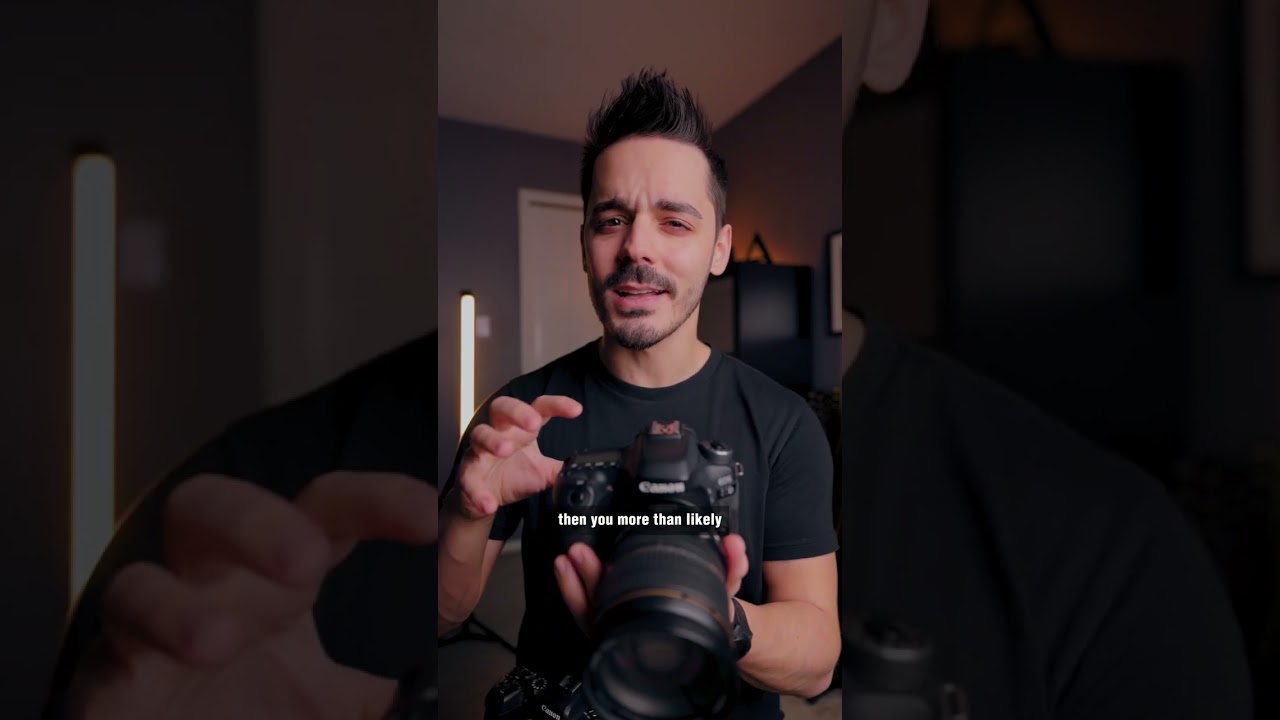
This image is property of i.ytimg.com.
Best Camera Lens for Beginners? 📷
Quick answer and promise of practical guidance
You want a lens that helps you see differently without getting in the way, that’s affordable enough to not make you anxious and good enough to make your photos feel like they matter. In plain terms: start with a versatile standard zoom or a fast normal prime depending on whether you value flexibility or learning fundamentals. I’ll walk you through the reasons, the jargon, and specific lenses you can actually buy, rent or borrow so you can make better images sooner.
Short recommendation for APS-C cameras and note about full-frame alternatives
If you have an APS-C camera, a 35mm-equivalent prime (roughly a 23–35mm lens depending on brand) or the kit 18–55mm zoom is the most useful starting point — they’re light, cheap, and teach you composition. If you shoot full-frame, a 24–70mm f/4 or a 50mm f/1.8 is the classical beginner route: one gives broad coverage, the other forces you to think about framing and light.
What you will learn in this article
You’ll learn why the lens matters more than you probably think, the difference between primes and zooms, the key specs that actually matter for beginners, how to choose lenses by camera format, and concrete lens suggestions for popular mounts. By the end you’ll have a simple decision framework so you can pick a first lens without second-guessing yourself.
Why the Right Lens Matters for Beginners
How lens choice affects image quality and creative control
The lens shapes the image before the sensor ever sees it. It decides what fits in the frame, how backgrounds fall away, how much light reaches the sensor and how details render. Choosing a lens is like choosing a language to speak with your camera: the same scene will feel different depending on focal length and aperture, and those differences affect emotional tone, storytelling, and what you notice in a moment.
Why lens choice can be more important than camera body
A lot of camera bodies within a bracket make differences you won’t notice immediately: higher megapixels or slightly better autofocus are incremental. The lens, by contrast, changes perspective, depth of field and low-light ability in a way that’s immediately visible. A decent lens on an entry-level body will often produce far better-looking photos than a weak lens on an expensive body.
How the right lens accelerates learning and improves results
A simple, consistent lens narrows your problems so you can solve them. When you use a single focal length or a limited zoom range, you begin to understand how distance, framing and aperture shape an image. That predictability speeds learning: you stop blaming equipment and start seeing composition, light, and timing. It’s the fastest route to improvement.
Lens Types Explained
Prime lenses and their benefits for beginners
Primes have one focal length and they force you to move with your feet to frame a shot. That constraint is productive. Primes typically offer wider maximum apertures than zooms at the same price, so they’re better in low light and give a shallower depth of field for portraits and subject isolation. They are often sharper in the center and lighter, and using one will teach you to compose deliberately.
Zoom lenses and why they offer flexibility
Zooms cover a range of focal lengths so you can reframe without changing position or swapping lenses. For learning, they reduce interruption: you can move from landscape to portrait to tighter detail quickly, which is handy on trips or events. The trade-offs are usually slightly slower apertures, potentially more weight, and sometimes softer corners, but modern zooms are very capable and the convenience is real.
Wide-angle lenses and typical use cases
Wide-angle lenses capture more of a scene and are ideal for landscapes, interiors, architecture and environmental portraits that show a subject in context. They exaggerate perspective, so foreground elements feel larger and backgrounds seem farther away. You’ll use them when you want to emphasize space and place or when you want your viewer to feel present in an environment.
Standard/normal lenses and why they’re versatile
Standard or normal lenses (roughly 35–50mm on full-frame) most closely match natural human perspective. They’re versatile for street, documentary, portraits and everyday work because they don’t distort features dramatically and they encourage a natural sense of framing. A normal lens is often the first lens that makes your photos look like what you saw.
Telephoto lenses for sports and wildlife
Telephoto lenses compress perspective and let you get close to distant subjects. For sports and wildlife you need reach and fast autofocus; for portraits a short telephoto (85–135mm equivalent) gives flattering subject isolation. Telephotos can be heavy and expensive, but they’re the tool you need when you can’t physically approach a subject.
Macro lenses for close-up photography
Macro lenses allow life-size or near life-size reproduction of small subjects. They are built for sharpness at close distances and are essential if you want to photograph insects, flowers or product detail. They also often make fine portrait lenses because of their resolution, but they demand careful focus and steady technique.
Specialty lenses such as fisheye and tilt-shift
Specialty lenses are tools for specific creative needs: fisheye exaggerates curvature for a dramatic, distorted look; tilt-shift lets you control plane of focus for architecture or creative miniaturization effects. They aren’t essential for a beginner unless your play is architectural precision or surreal distortion, but knowing they exist helps you decide if you crave particular visual effects.
Key Lens Specifications Beginners Should Know
Focal length and field of view explained in plain language
Focal length is the number that tells you how “zoomed in” the lens is. Short numbers (like 10–35mm) are wide and show more of the scene. Longer numbers (like 85–200mm) are telephoto and show less but larger subjects. Field of view is what you can see through the lens; think of focal length as how much of the world you’re inviting into the frame.
Aperture, depth of field, and low-light performance
Aperture (the f-number) determines how much light the lens allows and how shallow your depth of field can be. Lower f-numbers like f/1.8 let in more light and blur backgrounds more, which is great for portraits and low-light shooting. Higher f-numbers like f/8 give deeper focus, good for landscapes. Aperture controls both the exposure and the aesthetic separation between subject and background.
Image stabilization (IS/VR/OSS) and when it matters
Image stabilization helps reduce blur from camera shake, especially at slower shutter speeds or when using long focal lengths. It matters when you don’t want to raise ISO or when you shoot handheld in low light. Stabilization doesn’t freeze subject motion, but it allows you to shoot at slower shutter speeds without introducing blur from your hands.
Autofocus systems and focus motors
Autofocus speed and accuracy depend on the focus motor and the lens’s internal design. For most beginners, lenses with quiet and fast motors (often called STM, USM, HSM, or similar depending on brand) are preferable because they’ll focus reliably for stills and quieter for video. Pay attention to compatibility with your camera’s autofocus systems, especially for tracking moving subjects.
Lens mount compatibility and why it matters
Every lens mounts to a particular system; you can’t physically attach a Canon RF lens to a Sony E-mount camera without an adapter (and even then you can lose features). Buying lenses that match your camera mount ensures autofocus, stabilization and metadata work correctly. If you expect to change systems, research adapters and how they affect functionality.
Sharpness, distortion, chromatic aberration, and vignetting
Sharpness varies across a lens’s frame and aperture; many lenses are softer wide open and sharpen up when stopped down a bit. Distortion bends straight lines, most visible in wide-angle lenses; it’s fixable in software but simpler to choose a lens with minimal distortion for architecture. Chromatic aberration shows as color fringing in high-contrast edges; better-designed lenses control it. Vignetting darkens corners and can be a stylistic choice or an unwanted artifact — many cameras correct it in-camera.
Weight, size, and build quality considerations
Heavier lenses can be steadier on a tripod but wear on your neck during long walks. Metal builds are durable but pricier; plastic mounts and smaller lenses keep weight low and cost down. Think about how you like to shoot: travel light and you’ll use the camera more; go heavy and opt for ergonomics and robustness if you need it.
Choosing a Lens Based on Camera Format
APS-C cameras: crop factor, typical focal lengths, and recommended starting lenses
APS-C sensors are smaller than full-frame and multiply the effective focal length by a crop factor (usually around 1.5x or 1.6x). That means a 35mm lens on APS-C behaves like a 50–56mm lens on full-frame in terms of field of view. For APS-C start with a 35mm equivalent prime (23–35mm actual depending on brand) or a standard zoom such as 18–55mm or 18–135mm. These cover everyday needs and are light enough to carry all day.
Full-frame cameras: field of view differences and suitable beginner lenses
Full-frame sensors give you wider field of view for the same focal length and often better high-ISO performance. Suitable beginner lenses are the 24–70mm f/4 zoom for versatility, the 50mm f/1.8 prime for learning portraiture and low-light work, and a 24mm or 35mm prime if you lean toward landscapes or street photography. Full-frame lenses can be larger and pricier but often offer higher image quality.
Micro Four Thirds considerations and compact lens choices
Micro Four Thirds (MFT) systems have a 2x crop factor, so a 25mm lens behaves like 50mm on full-frame. They’re an excellent compact system for beginners who prioritize portability. Starting lenses include the 12–45/12–40 zooms for everyday use and a 25mm f/1.8 prime for low-light and shallow depth-of-field work. MFT lenses are typically smaller and lighter, which encourages more shooting.
How to convert focal lengths between formats using crop factor
Multiply the focal length by your camera’s crop factor to get the full-frame equivalent field of view: APS-C (1.5x) means a 35mm lens behaves like ~52mm; APS-C Canon (1.6x) means ~56mm. MFT (2x) means a 25mm lens equals 50mm. Use this conversion to compare how a lens will frame scenes across systems and pick focal lengths that match how you want to compose.
Best All-Purpose Lenses for Beginners
Standard zooms that cover the most common focal lengths
Standard zooms like 18–55mm (APS-C) and 24–70mm or 24–105mm (full-frame) are the workhorses of beginner kits because they cover wide to short-telephoto ranges. They let you shoot landscapes, portraits and everyday moments without changing lenses. Look for ones with image stabilization and good close-focus performance for versatility.
Versatile prime options that teach composition and low-light shooting
Primes such as 35mm and 50mm are ideal teachers. They force deliberate framing and reward you with wider apertures for low light and subject separation. A 35mm on APS-C or a 50mm on full-frame will be in the sweet spot for street and everyday portraits. If you want to learn to see, a single prime is a great constraint.
Travel-friendly zooms for convenience and reach
Travel zooms like 18–200mm or 18–135mm are about convenience. They’re useful when you want one-lens simplicity for trips and you don’t want to swap lenses. They often compromise on maximum aperture and weight but give you reach and context, which is valuable when access to subjects is limited.
Compact and lightweight lenses for everyday use
Compact primes and pancake zooms encourage regular shooting because they’re unobtrusive and comfortable to carry. If you want to form a daily habit, choose a lens that fits your bag and your lifestyle: a lightweight 35mm or a small 18–55 kit zoom will get you out of the house more often.
Best Budget Lenses for Beginners
Affordable primes that deliver great value and image quality
Budget primes like 50mm f/1.8s and 35mm f/1.8s are inexpensive and optically strong for the price. They teach aperture control and deliver that pleasing shallow depth of field without breaking the bank, and they’re often the first upgrade that changes your photography.
Economical zooms and what trade-offs to expect
Cheaper zooms give you flexibility but usually at the cost of slower apertures and less flare resistance. Expect corner softness and some distortion at the edges. For beginners, though, these trade-offs are acceptable given the range they offer and the savings.
Third-party budget options from reputable manufacturers
Third-party makers make excellent budget options that rival brand-name lenses in many cases. They can offer unique focal ranges and competitive performance for lower prices. If you’re on a budget, don’t dismiss them; just check reviews and compatibility notes for your camera mount.
Tips for buying used lenses and avoiding common pitfalls
Buying used can get you a much better lens for your money. Check for smooth focus and zoom operation, minimal fungus, and limited scratches on the glass. Test for accurate autofocus and look for signs of heavy drops. If you can, inspect the glass and mount in person, and keep receipts or return options when you buy online.
Best Lenses by Genre for Beginners
Portrait lenses and ideal focal lengths and apertures
For portraits you’ll want a lens that flattens faces slightly and separates subjects from background: aim for 85–135mm equivalent with apertures like f/1.8–f/2.8 for flattering results. On APS-C, that often means a 50–85mm lens; on full-frame a 85mm or 135mm works beautifully.
Landscape lenses and why wide-angle matters
Landscapes benefit from wide-angle lenses that let you include foreground detail and sweeping skies. Apertures aren’t critical, so a compact 16–35mm or 24–70mm works well. Landscape lenses also reward sharpness across the frame and minimal distortion.
Street and travel lenses for portability and discretion
Street and travel benefit from small, quiet lenses like 35mm or 23mm primes and compact zooms. You want to blend in and move quickly, so prioritize size, weight and reliable autofocus. A fast prime helps you shoot in dim cafés and alleyways.
Sports and wildlife lenses for reach and autofocus performance
For sports and wildlife you need fast autofocus and reach — telephoto zooms like 70–200mm or 100–400mm are standard. Look for lenses with effective stabilization and strong autofocus tracking to capture fleeting action.
Macro lenses and extension options for close-up work
Macro lenses in focal lengths from 60–105mm let you focus closely with life-size reproduction. If you’re on a budget, extension tubes can be a cheap way to get closer but they reduce light and working distance. A true macro lens will be sharper and more convenient for serious close-up work.
Video and vlogging lens choices for smooth footage and autofocus
For video you want lenses with smooth, quiet autofocus, steady apertures and, ideally, image stabilization. Wide-ish primes and compact zooms are popular for vlogging because they’re unobtrusive and deliver good background separation. Consider lenses with linear motors or stepping motors for minimal focus noise.
Sample Lens Recommendations by Mount
Canon EF/EF-S and RF suggestions for beginners
If you shoot Canon APS-C, the EF-S 18–55mm kit and the EF-S 24mm or 35mm f/2.8 STM are great starters. For full-frame Canon bodies, the EF/EF-S 50mm f/1.8 is a classic and the EF 24–105mm f/4 is a very usable all-purpose zoom. For Canon’s mirrorless RF mount the RF 50mm f/1.8 or RF 24–105mm f/4 are balanced choices.
Nikon F and Z mount starter lens picks
For Nikon DSLRs, the AF-S 50mm f/1.8 and the kit 18–55mm remain sensible. On Nikon Z mirrorless, a 35mm or 50mm f/1.8 for Z is a fine primer, with the Z 24–70mm f/4 as a practical all-round zoom.
Sony E-mount lenses suitable for novice photographers
Sony APS-C users do well with a 35mm/50mm equivalent prime (like 35mm f/1.8 for E) or the 18–135mm kit zoom for travel. Full-frame Sony shooters often start with the 50mm f/1.8 or the 24–105mm f/4 for versatility and manageable cost.
Fujifilm X-series lens recommendations for APS-C shooters
Fujifilm X-series APS-C photographers benefit hugely from compact primes like the 23mm f/2 or 35mm f/2, both inexpensive and excellent optically, and the 18–55mm kit zoom that’s light and sharp for travel.
Micro Four Thirds lens options for Olympus and Panasonic users
For MFT, the 25mm f/1.8 prime and the 12–45/12–40mm kit zooms are excellent starting points. They keep your kit small while giving you diverse creative options and strong image quality.
Reliable third-party lenses that work across mounts (Sigma, Tamron, Tokina)
Sigma and Tamron offer affordable primes and zooms in multiple mounts, often with great performance for the price. Look for standard zooms and 30–35mm primes from these makers if you want high value without brand premiums, and check mount-specific compatibility for autofocus and stabilization.
Conclusion
Recap of the most important factors when choosing a first lens
Choose a lens that matches how you shoot: do you need flexibility, light-gathering or portability? Consider focal length, aperture, stabilization, autofocus quality and mount compatibility. Remember: a good lens on an entry-level body will teach you more than a mediocre lens on a pro body.
A simple decision framework to pick your next lens based on camera format and shooting goals
If you prioritize learning and low light: pick a fast prime (35mm APS-C, 50mm full-frame). If you want convenience and travel: choose a standard zoom (18–135mm APS-C, 24–105mm full-frame). If your work is specific (portraits, wildlife, macro) match focal length and aperture to those needs. Always check mount compatibility first.
Quick recommended starting lenses for APS-C and full-frame beginners
For APS-C: a 35mm-equivalent prime (23–35mm depending on brand) or the 18–55mm/18–135mm kit zoom. For full-frame: a 50mm f/1.8 prime or a 24–105mm f/4 zoom. These will cover most needs and teach you a lot quickly.
Final encouragement to experiment, rent, and practice to discover the best fit
You learn to photograph by photographing. Rent a lens for a weekend, borrow from a friend, and notice what makes you reach for the camera. The right lens is the one that suits your curiosity and your life; find it by trying things, being patient with the learning curve, and keeping the lens you love on your camera as often as you can.