
ULTIMATE Beginner’s Guide To Camera Lenses Made Simple for New Photographers” breaks down focal length, aperture, and lens types in plain language so you can choose lenses that fit your creative vision. The video by Tech Through The Lens guides you step-by-step, turning technical concepts into practical skills you can use right away.
The article outlines when to use primes versus zooms, how aperture controls depth of field, and tips for building a starter kit, along with the creator’s YouTube gear list. You can join the free Camera Collective to ask questions directly, find business contact information in the video details, and note that some links may be affiliate links earning a commission.
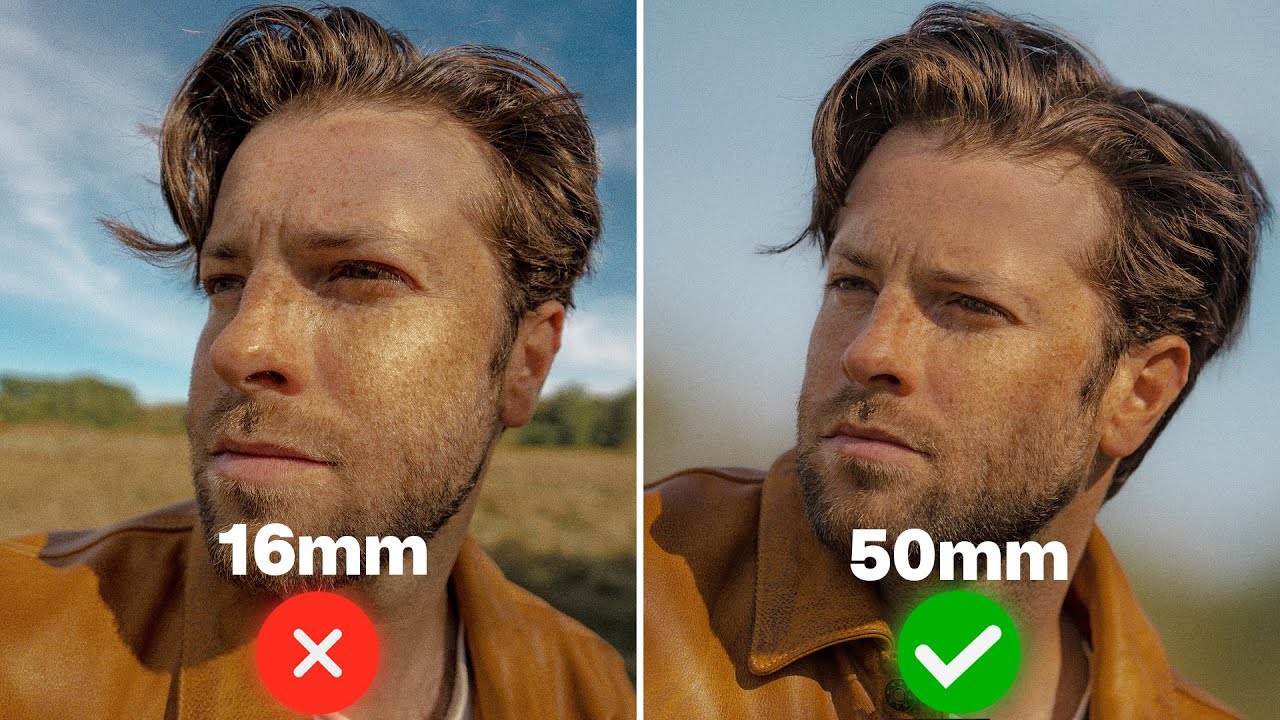
This image is property of i.ytimg.com.
What is a camera lens and how it works
A camera lens is the part of your camera system that gathers light from the world and arranges it so that an image can be recorded on the sensor. It feels a bit like a translator: you point it at a scene, light comes in, and the lens maps that light into a tiny, orderly portrait on the sensor. If you think of the camera body as the house where images live, the lens is the corridor that directs guests — the photons — into the right rooms.
Basic purpose of a lens and how it forms an image on the sensor
The basic purpose of a lens is to bend and focus light so that rays from each point in the scene meet again at corresponding points on the sensor, forming a sharp image. You can visualize this with a simple analogy: when you bring a magnifying glass closer or farther from a page the focused spot changes, because the distance between lens and sensor (or film) matters. Inside a camera, the lens elements set up that focus so light from a distant tree or a nearby face lands in the right place.
Key physical components: glass elements, groups, barrel, diaphragm
A lens is made from multiple glass elements arranged in groups within a barrel. Elements are individual curved pieces of glass; groups are fixed or moving sets of elements that shift for focus or zoom. The barrel is the housing that keeps everything aligned and controls the physical interface with your camera. The diaphragm — the aperture — is an adjustable ring of blades inside the lens that controls how much light gets through. Each piece has a job, and small changes in shape or position change the image quality in ways you can often see.
How light transmission and coatings affect image quality
Light transmission is about how much light actually reaches the sensor and how cleanly it does so. Lens coatings reduce reflections inside the glass that cause flare, ghosting, and contrast loss. Better coatings also keep colors truer and boost contrast in backlit situations. If you’ve ever shot into the sun and seen a softness or weird colored streaks, that’s where coatings and internal lens design matter — they keep stray reflections from spoiling the picture you were after.
Relationship between lens design and optical characteristics
Every optical choice — the number of elements, their shapes, how they move — creates trade-offs in sharpness, distortion, vignetting, and chromatic aberration. Some lenses are designed to be compact and light, but this can introduce more distortion or lower corner sharpness. Others are engineered for ultimate resolution and weight more. The signature look of a lens — how it renders contrast, micro-contrast, and out-of-focus areas — is a product of its design. When you pick a lens, you’re choosing a set of compromises made by engineers.
How lenses differ from camera bodies in terms of function and upgrades
Lenses and bodies serve different roles: the body houses the sensor, processor, and controls, while lenses determine what the sensor sees. You’ll upgrade bodies for better low-light performance, higher megapixels, or faster autofocus; you’ll upgrade lenses to get different focal lengths, better sharpness, or more pleasing bokeh. Bodies often become obsolete faster because of electronics, while lenses, if you buy well, can stay useful for years and even outlast several camera bodies.
Key lens specifications explained
If you look at any lens, you’ll see numbers and abbreviations. They tell you what the lens can do and how it will behave in real situations. Understanding those specs takes the guesswork out of choosing lenses.
Focal length and its units
Focal length, usually given in millimeters (mm), is the distance between the lens’s optical center and the sensor when focused at infinity. It determines the angle of view: lower numbers are wide, higher numbers are telephoto. A 35mm lens gives a wider field of view than a 50mm, and a 200mm brings distant subjects much closer. The mm value is the shorthand for how the lens “frames” the world.
Maximum and minimum aperture (f-number) and what they mean
The aperture is expressed as an f-number like f/1.8, f/2.8, or f/16. The smaller the f-number, the wider the aperture, and the more light reaches the sensor. Maximum aperture is important for low light and shallow depth of field; minimum aperture (a larger f-number) is used for large depth of field. Aperture also affects lens size: faster lenses (lower f-numbers) are usually larger, heavier, and more expensive.
Minimum focus distance and reproduction ratio
Minimum focus distance tells you how close you can get to a subject and still achieve focus. The reproduction ratio, or magnification, tells you how large the subject will appear on the sensor — 1:1 means life-size (macro), 1:2 means half life-size. If you want tight close-ups of flowers or insects, check both numbers; they determine whether you can get that intimate framing without external extension tubes.
Filter thread size and physical dimensions
Filter thread size (measured in mm) is the diameter of the front of the lens where filters screw on. Knowing this helps you buy circular polarizers or ND filters that fit. Physical dimensions give you a sense of how a lens balances on your camera and whether it will fit in a bag or a gimbal. These are practical details, but they matter every time you pack up and decide what to shoot.
Lens weight and build quality (plastic vs metal, weather sealing)
Weight and build quality influence how a lens feels and how it survives in rough conditions. Plastic mounts and barrels can be light and cost-effective; metal parts tend to be more durable. Weather sealing is a feature that gives you confidence to shoot in rain or dust. The choice here depends on your shooting style: if you travel light, you might accept a plastic build; if you often work outdoors, weather-sealed metal-bodied glass could be worth the premium.
Focal length and perspective
Focal length does more than zoom; it changes the way space feels in your image. You’ll use different focal lengths to suggest intimacy, distance, or drama — often without thinking about the technicalities.
How focal length affects angle of view and composition
Focal length determines the angle of view — what fits into your frame. Wide focal lengths capture more of a scene and are great for landscapes or interiors, while long focal lengths narrow the field of view and isolate subjects. Your composition changes because the amount of context around the subject shifts; with a wide lens you include environment, with a telephoto you cut it out and concentrate attention.
Wide, normal, and telephoto focal length ranges and common uses
Generally, wide lenses are roughly 10–35mm (varies with sensor size), normals around 35–70mm, and telephotos 70mm and above. You’ll use wide lenses for architecture, street scenes, and cramped rooms; normals for everyday portraits and documentary work; telephotos for wildlife, sports, and compressing distance. Each range carries a different set of expectations about framing and distance.
Perspective compression and exaggeration explained simply
Perspective depends on distance to your subject, not focal length, but focal length affects how you typically position yourself. A telephoto lens from far away flattens the scene so background and foreground seem closer — that’s compression. A wide lens up close exaggerates distances, making foreground objects disproportionately large. Use these effects intentionally: compression can make a skyline look stacked and dense; exaggeration can make a foreground flower domineering.
How to choose focal length based on subject distance and framing
Pick a focal length by thinking where you can physically stand and how much context you want. For a portrait where you’re close and intimate, a 35–50mm on full-frame feels natural; for a tightly framed headshot, 85–135mm compresses features pleasingly. If you can’t move physically (e.g., at a concert), choose a longer focal length. It’s less about rules and more about what distance you can achieve and the look you want.
Examples of common focal lengths and typical results
A 24mm gives a wide, dynamic scene good for landscapes and interiors; a 35mm feels natural for street and environmental portraits; a 50mm is often called a “standard” lens for its human-eye-like view; 85mm is a classic portrait lens for flattering compression and background separation; 200mm is for distant subjects like birds or sports. Each produces a distinct relationship between subject and space.
Aperture and its effects
Aperture is one of the most creative controls you have. It governs exposure and depth of field and does so in a way that can feel almost personal — controlling how much of your subject’s world is visible.
How aperture controls exposure and light entering the lens
Aperture adjusts the size of the opening light passes through; wider apertures (smaller f-numbers) allow more light and brighten exposure, while smaller apertures let less light through. When you change aperture, you change how you balance shutter speed and ISO to maintain correct exposure. It’s the central variable when you’re deciding between freezing motion, keeping things sharp, or isolating a subject with light.
Aperture and depth of field: creating background blur vs sharpness
Depth of field — the zone that appears acceptably sharp — shrinks as you open the aperture and grows as you stop down. Use a wide aperture to blur backgrounds and separate your subject, and a narrow aperture to keep most of the scene sharp. The effect is strongest when you combine wide aperture with longer focal lengths and close subject distance.
Bokeh quality: what creates pleasing out-of-focus areas
Bokeh is the quality of the out-of-focus areas, not just how blurred they are. It’s influenced by aperture blade shape, optical design, and aberrations. Rounded blades produce softer circles of light; certain optical designs give smoother, creamier bokeh, while cheaper designs might render harsh onionskin rings or nervous, busy backgrounds. A lens with nice bokeh can make ordinary scenes feel calm and tactile.
Low-light performance and choosing fast lenses
“Fast” lenses — those with large maximum apertures like f/1.4 or f/1.8 — let you shoot in lower light without raising ISO or slowing shutter speeds. They’re invaluable for indoor portraiture, events, and night scenes. But they’re also bigger and more expensive. Decide how often you’ll need that extra stop or two; for some people, the trade-off is essential, for others it’s luxury.
Trade-offs between wide aperture, size, weight, and cost
Wider apertures demand more glass and more precise engineering, so faster lenses are typically heavier and pricier. You sacrifice portability for light-gathering and shallow depth of field. Consider whether you need that top-end aperture consistently or if a slower, lighter, and cheaper alternative will serve you most of the time. The right lens is the one you actually carry and use.
Depth of field and background blur
Depth of field feels like a technical topic until you start using it to shape mood. It’s the tool that turns a scene into a portrait or a documentary image into a dreamy memory.
Definition of depth of field and factors that influence it
Depth of field is the distance between the nearest and farthest points that appear acceptably sharp. It’s influenced by aperture, focal length, subject distance, and sensor size. Smaller apertures, shorter focal lengths, greater subject distance, and larger sensors all increase DOF. When you control these variables, you control what the viewer’s eye lands on.
Near and far limits of acceptable sharpness
The near and far limits are determined by your chosen aperture and focus point. Typically, the zone extends roughly twice as far behind the focus point as it does in front when you’re at moderate apertures, but this shifts with very wide apertures or macro distances. Understanding where these limits fall helps you place your focus precisely — especially for group portraits or landscape shots where focus placement matters.
Techniques to control depth of field for portraits and landscapes
For portraits, increase subject separation with a wide aperture, longer focal length, and greater distance between subject and background. For landscapes, stop down to increase DOF, focus a third into the scene (hyperfocal technique) or use focus stacking in post if you want extreme sharpness from foreground to background. Small, deliberate moves in distance and aperture make big differences.
How sensor size and focal length interact with depth of field
Larger sensors (full-frame) produce shallower depth of field at the same framing and aperture than smaller sensors (APS-C, Micro Four Thirds). To get the same framing on a smaller sensor you use a shorter focal length or physically move closer, which increases DOF. When you compare lenses across systems, remember to factor in sensor size if depth of field is a priority.
Practical tips for maximizing subject separation
Place your subject farther from the background, use the longest focal length you can with your envelope of movement, open the aperture, and get closer if possible. Also, reduce distractions in the background or choose backgrounds that render softly. Small choices — a one-step aperture change, a step to the right — can strongly improve separation.
Prime lenses versus zoom lenses
Choosing between primes and zooms is partly practical and partly aesthetic. Both have places in a thoughtful kit.
Characteristics of prime lenses: sharpness, aperture, size
Prime lenses have a fixed focal length and often deliver better sharpness, less distortion, and wider maximum apertures for the money. They tend to be smaller for a given aperture and can produce very pleasing rendering. Their limits force you to move and see differently, which can be creatively productive.
Advantages of zoom lenses: flexibility and convenience
Zoom lenses cover a range of focal lengths in one barrel, letting you reframe without moving. They’re convenient for run-and-gun shooting, travel, events, and when you can’t or don’t want to change lenses. Modern zooms can be very sharp and fast, too, though often heavier and sometimes more costly than single primes.
When to choose a prime vs when to choose a zoom
Choose primes when you want the ultimate in speed, optical character, or compactness and when you want to cultivate a focused way of seeing. Choose zooms when you need flexibility, don’t want to change lenses frequently, or when weight and cost of multiple primes would be prohibitive. Many pros mix both depending on the job.
Hybrid strategies: using a couple of primes vs a versatile zoom
A common hybrid strategy is to own one versatile zoom (e.g., 24–70mm or 24–105mm) for general shooting and a couple of primes (35mm, 85mm) for situations where character and speed matter. This gives you range for everyday work while keeping the creative advantages of primes when needed.
Cost considerations and value for different photographers
Primes can be great value for specific tasks, but buying several can add up. Zooms provide broad capability in one investment. Think about what you shoot most, how often you’ll carry gear, and where compromises are acceptable. Value is measured in how often you use a lens and how it helps you make images you care about.
Lens mounts and compatibility
You can’t mount a lens to every camera; mounts matter. They’re the mechanical and electronic handshake between lens and body, and they determine future upgrade paths.
What a lens mount is and why it matters
A lens mount is the physical interface on the camera and lens that holds them together and allows data exchange. It matters because it dictates which lenses will fit and communicate with which cameras. Buy into a mount and you’re buying into an ecosystem — lenses, adapters, and often resale value.
Major manufacturer mounts and cross-compatibility issues
Major mounts include Canon RF and EF, Nikon Z and F, Sony E, Micro Four Thirds, Leica/ L-Mount, and others. Some mounts share heritage or adapters, but native compatibility is always safest for autofocus and stabilization. Cross-compatibility varies; an adapter might let you use a lens but with limitations.
Using adapters: pros, cons, and limitations
Adapters allow lenses from one mount to sit on another body. They expand options but can compromise autofocus speed, communication for aperture control, or stabilization. Some adapters are near-transparent, especially within ecosystems (e.g., EF on some mirrorless), while others add manual-only use and annoyance. Adapters are useful tools, but they’re a practical compromise.
Electronic communication between lens and camera body
Modern lenses and bodies talk to each other electrically: they share focus distance, aperture settings, lens metadata, and sometimes optical correction parameters. This communication enables image stabilization, autofocus, and features like lens-specific sharpening. If you use older manual lenses, you’ll lose some of these conveniences unless an adapter translates them.
How to check compatibility before buying a lens
Always check the exact mount of the lens against your camera model, and read notes about autofocus and stabilization when using adapters. Look at manufacturer compatibility charts, ask sellers about firmware updates, and remember that physical fit does not guarantee full electronic function. Practical patience here avoids disappointment.
Crop factor and sensor size effects
Sensor size changes how focal lengths behave and how images feel. It’s a hidden variable that shapes the appearance of every lens you attach.
Difference between full-frame, APS-C, Micro Four Thirds and other sizes
Full-frame sensors match the traditional 35mm film size. APS-C sensors are smaller (roughly 1.5–1.6x crop factor), and Micro Four Thirds is smaller still (2x crop). Smaller sensors mean a narrower effective field of view from the same focal length and typically increased depth of field for the same framing and aperture.
How crop factor changes effective focal length and field of view
Crop factor multiplies the focal length to give an effective field of view — a 50mm lens on a 1.5x APS-C crop camera looks like a 75mm on full-frame. This doesn’t change the lens’s optical properties but does change how much of the scene you capture. When you plan a kit, account for this so you don’t end up unexpectedly tight or wide.
Impact on depth of field and low-light performance
Smaller sensors tend to produce deeper depth of field for the same framing and aperture, which can be an advantage for landscapes or a disadvantage when you want creamy background blur. They also usually have higher noise at a given ISO than larger sensors, so low-light performance can be worse — though sensor and processor improvements have narrowed this gap.
Choosing lenses with sensor size in mind
Pick lenses that complement your sensor size and shooting needs. On crop bodies, a shorter focal length will give an equivalent full-frame view, so you might choose wider glass to maintain a certain look. Pay attention to lens coverage (some lenses are designed for smaller sensors and won’t cover full-frame) and choose with your creative goals in mind.
Common misconceptions and how to calculate equivalent focal lengths
A common misconception is that focal length itself changes with sensor; it doesn’t. The calculation is simple: equivalent focal length = focal length × crop factor. Use that to translate a lens’s behavior to the full-frame world if you need a mental benchmark. That helps when reading reviews or comparing kits across systems.
Autofocus, focus modes and stabilization
Autofocus and stabilization are the technologies that let you reliably make sharp images when you need them. They have become so good that we often forget how much they ask us to trust the camera.
Types of autofocus systems in lenses and cameras
Autofocus systems include phase-detect, contrast-detect, and hybrid systems that combine both. Lenses use motors — ultrasonic (USM), stepping (STM), linear — that drive focusing elements. Phase-detect is generally faster for tracking moving subjects, contrast-detect can be more precise in static scenes, and hybrid systems try to get the best of both.
Single, continuous and manual focus modes and when to use them
Single (AF-S) locks focus once — use it for static subjects. Continuous (AF-C) keeps adjusting as the subject moves — use it for sports or moving children. Manual focus gives you direct control and is invaluable for macro, low light, or when you want precise placement of the focus plane. Switching modes depending on the scene is a basic discipline that yields more reliable results.
Focus speed and accuracy factors
Focus speed depends on motor type, lens design, camera processing, and light/contrast conditions. Accuracy depends on calibration, lens-to-body communication, and your chosen focus point(s). Longer focal lengths and shallow depth of field demand more precise focus; a small misfocus at f/1.4 on an 85mm can ruin a portrait.
Image stabilization types and how they help handheld shooting
Stabilization can be in the lens (optical stabilization, IS/OS) or in the body (IBIS). Lens IS is often tuned to the lens’s focal range and can be very effective for telephotos; IBIS stabilizes across mounted lenses and benefits wide-angle and non-stabilized glass. Both reduce handshake blur, letting you shoot at slower shutter speeds and still get usable frames.
Limitations of stabilization for long exposures and panning
Stabilization helps handheld, but it doesn’t make slow-shutter long exposures of stationary scenes sharp if there’s subject motion. For panning, modern systems often include a mode specifically for panning that stabilizes in one axis. Stabilization also won’t help if you want to freeze action; for that you need faster shutter speeds.
Conclusion
Lenses are where the tangible, tactile choices in photography live. You decide how wide your world feels, what separates foreground from background, what light you gather, and how the scene is rendered.
Recap of the most important lens concepts for beginners
Remember these essentials: focal length shapes framing and perspective; aperture controls light and depth of field; lens build and coatings affect reliability and image quality; mounts determine compatibility; sensor size changes the effective field of view; and autofocus/stabilization shape usability. These are the knobs you’ll turn as you learn.
Simple action steps to start exploring lenses with confidence
Start with one versatile lens — a 24–70mm or a 35/50mm prime depending on your system — and use it until you understand the look you want. Rent or borrow a faster prime like an 85mm to feel a shallow depth of field, and experiment with a telephoto for compression. Pay attention to how distance, aperture, and focal length interact.
Encouragement to practice, experiment and ask questions
Photographic taste develops through repetition. Shoot the same subject with different lenses, compare results, and note what you prefer. Don’t be afraid to ask others — communities are full of practical advice. Practice is the only way to learn which lens choices feel right to you.
Key takeaways to guide future lens purchases and learning
Buy lenses that suit how you shoot, not what’s fashionable. Consider weight, budget, and whether you need speed or range. Think of lenses as long-term investments in your vision: they change how you see and how you work. Keep experimenting, and let each lens teach you a little about the world and how you want to show it.