
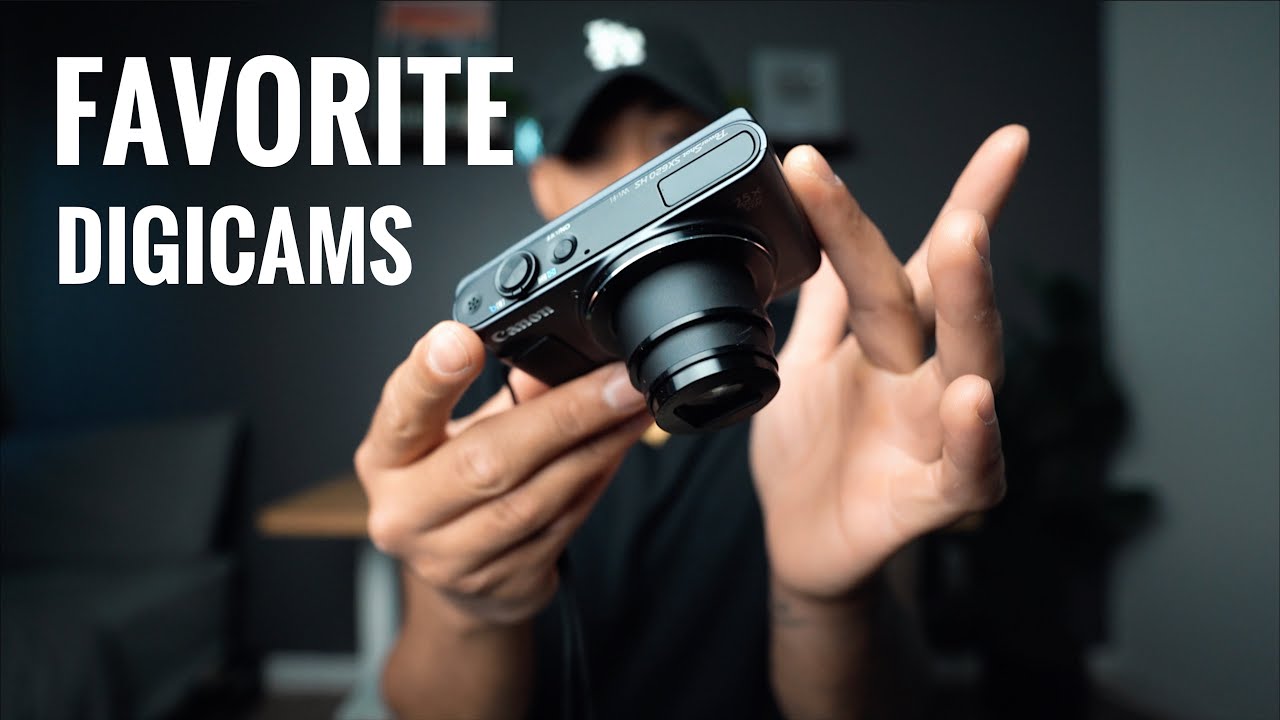
KingJvpes walks you through favorite digicams and shares sample photos, showing how small, affordable cameras can give your shots a warm vintage feel without the hassle or expense of professional gear.
You’ll find a clear rundown of top digicams for 2023, a look at a Fuji setup, must-have essentials and accessories, film recommendations, current deals, and the editing rig used to polish the images.
My Favorite Digicams Overview
You want a small camera that feels easy to carry and kind of inevitable in your hand, the sort of object that makes it simple to notice things. This list grew out of watching a video by KingJvpes and spending time with sample photos that felt like memories rather than demonstrations. What follows is a considered, rather unpretentious account of digicams you might actually use, not just admire on a specs sheet.
Summary of what I look for in a digicam for vintage everyday photography
You look for a camera that gives you something almost accidental—character you didn’t have to invent. That means a pleasing JPEG color science, lenses with a little character at the edges, and controls that don’t demand constant tinkering. You want compactness, quick start-up, and a camera that rewards simple framing and small moments. Durability and battery life matter, but more than that you care about the sort of images it makes straight out of the camera: warm, slightly imperfect, and honest.
Why compact digicams beat phones and bulky DSLRs for casual vintage shooting
You know how your phone is always there, but somehow every phone photo looks like every other phone photo. Compact digicams feel like a tool rather than an extension of the screen; they have intentional limitations that force you to compose, to slow down. Compared with DSLRs, they’re not intimidating. You can tuck them into a coat pocket and forget them until a moment appears. They encourage candidness because people are less put-off by them than by an enormous lens, and you don’t overthink every shot. For vintage vibes specifically, many digicams have distinct color profiles and JPEG processing that phones try to imitate but can’t quite replicate.
Key features common to my favorites: color science, lens character, portability
The common thread in cameras you’ll enjoy is a pleasing, slightly idiosyncratic color science—skin tones that are flattering, highlights that don’t blow out into nothing, and midtones that feel tactile. Lens character often means subtle falloff, a gentle vignette, and softening at the edges when you want it. Portability is not just physical size but also how unobtrusive the camera feels in daily life: quick controls, reliable autofocus, and a build that survives being shoved into a bag with your notebooks and wallet.
How sample photos shaped this list and what to expect from each model
You should look at sample photos not for pixel-peeping detail but for mood. In the images that shaped this list you’ll see the same qualities you’re after: warmth, forgiving highlights, and a lived-in sense of light. Expect the Fuji picks to offer film-like simulations and pleasing skin tones; expect Ricoh to deliver razor-sharp center detail and a cropped, street-ready field of view; expect older Canons and Nikons to give you softer, nostalgic files you may edit minimally. Each model on this list yields a predictable look that helps you build a consistent visual diary.
Why Digicams for Vintage Everyday Photography
There’s something quietly radical about choosing ease over the promise of better pixels. You’re selecting a practice that favors presence over perfection.
Instant, low-stress shooting: capture moments without overthinking settings
A digicam wakes quickly and asks nothing dramatic of you. You raise it, frame, and press. That immediacy keeps you from overthinking aperture charts or pixel counts and allows you to capture the texture of a morning, a face, a doorway—things that fade if you pause to calibrate. For everyday vintage photography this is priceless: those small, domestic instances are the ones that feel like a memory.
Built-in character and color that lends itself to vintage aesthetics
Manufacturers often tune compact cameras to produce pleasing JPEGs, which means the camera does half the editing for you. You’ll find warm midtones, restrained contrast, and highlight roll-off that feels filmic. These are the ready-made ingredients of a vintage aesthetic; you can push them further in post, or leave them alone and let the camera be the editor.
Size and convenience for everyday carry and candid street-style photos
You carry a small camera without thinking about it; you slide it out and a shot is already happening. This convenience is what makes candid street-style photos possible. People forget a small digicam faster than they do a hulking DSLR, and you can move through your day with less performative anxiety, more curiosity.
Affordability and room for experimentation without fear of expensive gear
Part of why digicams are ideal is that they’re forgiving financially. You can buy used, sell quickly, or let one get scuffed without an entire year of savings disappearing. That freedom encourages experimentation—different settings, odd filters, intentional mistakes—without the same fear you might have with costly full-frame gear.
This image is property of i.ytimg.com.
My Fuji Setup
Fuji often feels like a compromise between instant charm and thoughtful craft, which is why you might find it at the core of a vintage-digicam toolkit.
Core Fuji camera(s) I use and what makes them special for vintage looks
You might rely on an X100 variant as the mainstay: fixed 35mm-equivalent lens, tactile dials, and a sensor capable of lovely color. Those bodies tend to have intuitive controls and a weight that feels like a promise. What makes them special is how the in-camera JPEGs render shadows and highlights—generally in a way that references film without copying it outright. You get the convenience of a compact with a character that asks to be used.
Preferred Fuji color profiles and in-camera film simulations to try
Classic Chrome and Astia are the obvious starting points—muted contrast, Pleasant skin tones, and a midtone bias that reads as nostalgic. Velvia gives you more punch if you want saturated, retro postcards. If you want something more cinematic, try Eterna for a flattened contrast that responds well to color grading. You should experiment with Grain and Highlight Tone controls to nudge the files toward the look you want.
Accessories I pair with my Fuji bodies for daily use
You’ll want at least one spare battery and a small, soft case that protects without bulk. A wrist strap keeps the camera quick to draw. Sometimes you’ll carry a leather half-case for grip and warmth, other times a silicone pouch that doesn’t look precious. A small ND filter can help when you want a shallow depth of field in daylight, and a simple protective UV or clear filter will keep the lens safe without altering the look.
Examples from the video and notes on how I captured specific tones
In the sample photos that influenced this list, you’ll notice a cozy yellow in late-afternoon interiors and a kind of gentle compression in street scenes. Those tones came from shooting Classic Chrome, underexposing slightly to saturate midtones, and letting the camera’s JPEG engine do subtle contrast work. Sometimes the look was enhanced by warming the white balance a hair, or by adding film grain in post when the sensor files were too clinical.
Other Brand Picks
If Fuji is your steady companion, other brands offer different tonalities and handling that might suit your hands or your sensibility.
Compact Canons and how they differ in color and handling
Canon compacts, especially older S-series and some G-series models, tend to render warm, flattering skin tones and a slight richness in reds. The ergonomics are often simple and reliable, with menus that don’t require a philosophical commitment. Canons can feel like a kind friend: they smooth, they make things presentable, and they’re easy to trust for everyday shooting.
Nikon and Coolpix models worth considering for retro color palettes
Some Nikon Coolpix models offer pleasant, slightly punchy color science and dependable autofocus. Older APSc compacts like the Coolpix A (now discontinued but findable used) are notable for their more DSLR-like sensor and a look that translates well to muted, retro editing. You’ll find quieter shutter sounds and compact, straightforward bodies that reward street work.
Ricoh GR series and why its rendering appeals to street and vintage shooters
The Ricoh GR series is a favorite for a reason: razor-sharp center detail, a 28mm-equivalent field of view that feels honest for street work, and a rendering that’s gritty in a good way. The files are crisply detailed but can be softened with in-camera settings or post-processing to achieve that vintage grit. If you like precise framing and a camera that disappears in your hand, the GR is likely to please.
Olympus and Sony compact models with notable lens sharpness and character
Olympus compacts—along with OM System iterations—often present punchy OOC (out-of-camera) JPEGs and lenses that resolve well, with a distinctive color palette leaning into cooler tones and crisp micro-contrast. Sony’s RX100 line is famous for its sensor quality and lens sharpness; the files are clean, which is useful because you can then choose how much vintage texture to add in editing. Each brand has a different default “mood,” so pick the one that aligns with the vibe you want.
How to choose between brands based on look and ergonomics
Choose based on the look you want to live with and how the camera feels in your hand. If you prefer warm, forgiving skin tones and simpler menus, Canon might be your steady choice. If you want razor-sharp street frames and a no-nonsense approach, Ricoh leans that way. Fuji will offer film-esque personality and tactile controls. Sony gives you clean files to manipulate. Try to hold them before you buy; how the buttons fall under your fingers matters as much as the JPEGs.
Budget and Enthusiast Picks
Your budget will shape the hunt as much as taste.
Under-$200 cameras that punch above their price for vintage vibes
Look for older models that have been cared for: second-hand Canon S-series, early Sony RX100 units, or basic Nikon Coolpix cameras. They tend to have small sensors but often produce charming JPEGs with a retro softness that you can lean into. You won’t get the highest resolution or low-light prowess, but for daytime street and domestic shots, these cameras often feel just right.
Mid-range digicams that balance image quality and nostalgic character
Mid-range compacts like the Canon G7 X Mark II, Sony RX100 II–V, or slightly older Fuji fixed-lens models provide better sensors, useful controls, and still-pleasant JPEGs. They balance portability with image quality and let you shoot in more varied light without losing the warmth you want.
Higher-end compact picks for enthusiasts who still want simplicity
For a higher budget, consider Fuji X100V, Ricoh GR III, or the latest Sony RX100 variants. These cameras give you the best balance of sensor performance, lens quality, and an immediate image aesthetic that rewards minimal editing. They’re more expensive but still compact and simple to operate, and they’re the kind of camera you keep for years.
How to find reliable used examples and what to check when buying used
Buy from reputable sellers and inspect shutter counts where possible. Check for lens scratches, sensor dust spots, sticky buttons, and battery health. Ask for sample photos taken by the seller to verify how the camera renders. If you can, test the autofocus and ensure the battery charges and holds power. A little vigilance goes a long way when you’re buying used.
Essential Accessories
You don’t need much, but what you do carry should be thoughtful.
Extra batteries and my recommended charging routine
Always have at least one spare battery. Rotate usage so batteries aren’t always at 0% or 100% when stored. Lithium-ion chemistry likes partial charges; if you’re storing a battery long-term keep it around 40–60%. Charge one while using the other, and you’ll never miss a moment.
High-quality SD cards: speed classes and capacity guidance
Choose cards from reliable brands and match their speed class to your camera’s needs—U1/U3 for continuous shooting or video; V30 or higher if you shoot lots of video. 64GB or 128GB gives you breathing room for everyday shooting; smaller cards can risk filling up at inconvenient times.
Simple protective cases and straps for comfortable everyday carry
A slim case that protects the body and lens without being bulky is ideal. A wrist strap or a short neck strap lets you keep the camera ready without it swinging. Leather half-cases are not just aesthetic; they provide grip and a little protection against knocks.
Lens cleaning kit and how to preserve character while removing grime
A soft brush, microfibre cloth, and a safe lens solution are enough. Clean gently; you’re removing smudges, not altering the coating. If you like cassette-style softness or slight flare, don’t try to remove the patina out of the lens—clean for clarity but respect the quirks that contribute to vintage character.
More Accessories
A few extras expand your creative options without complicating your setup.
Portable flash and diffusers for filling shadows with a vintage feel
A compact, tilt-able flash that syncs with your camera helps when interiors are dim. Use a small diffuser or bounce material to soften the light; harsh direct flash rarely reads as vintage. The goal is subtlety—fill shadows without flattening texture.
Clip-on or add-on lenses and creative filters for altered color/softness
You can experiment with screw-on warm filters, soft-focus lenses, or clip-on wide adapters. These alter the look in-camera and can create an instant vintage effect, but they also change framing and light behavior—use them when you want a decided aesthetic choice rather than as a default.
Mini tripods and tabletop supports for stable shots and self-portraits
A small tripod is useful for low-light handheld limitations, deliberate portraits, or self-portraits where you want to be in the frame. Tabletop tripods are light, cheap, and reliable; they let you take the occasional quiet, composed still life.
Carrying solutions: small bags, pouches, and belt rigs for quick access
A small crossbody or pouch keeps your camera accessible and safe. You want something discreet—enough space for a battery and card, but not so much that it becomes your bag. A belt rig can feel ostentatious, but for urban photographers who shoot all day it’s efficient.
Shooting Techniques for Vintage Look
These are small adjustments that accumulate into a consistent aesthetic.
Composing for nostalgia: subjects, framing, and simple storytelling
Look for ordinary things that feel like memories: signage, worn stair treads, late-afternoon shop windows. Frame simply—avoid cluttered edges that compete with your subject. Tell something small: a hand on a rail, a spilled coffee, a kid waiting for a bus. The story is less about drama and more about a moment that looks like it could be a memory.
Lighting approaches that flatter vintage color tones and highlights
Soft light flatters: overcast skies, shaded windows, and golden hour. Backlight with a little glare can create a halo that reads as temporal warmth. Avoid brutal midday sun if you want gentle colors; use shade or reflectors to control contrast. Your camera’s JPEG will often reward softer transitions.
Using intentional underexposure and overexposure for mood
Underexpose slightly to deepen colors and create mood; the risk is losing shadow detail. Overexpose on purpose to produce a faded, sun-bleached look reminiscent of older prints. Both techniques require you to understand how your camera handles highlights and shadows so you can shape the mood without destroying detail.
Working with grain, blur, and vignetting to enhance retro aesthetics
Grain adds tactility; subtle blur softens clinical sharpness; vignetting centers attention. You can add grain in post or use in-camera settings where available. Embrace a little optical imperfection—scratches, flare, and softness can be integral to the image’s emotion rather than mistakes to be erased.
Camera Settings and Profiles
Understanding a few core settings gives you predictable results without obsession.
Ideal JPEG and RAW strategies for vintage processing workflows
If you love the camera’s JPEGs, shoot JPEGs for a fast, consistent look. If you like post-processing flexibility, shoot RAW and apply a consistent preset that mimics film—warm midtones, slight curve, grain. Many photographers shoot both RAW+JPEG so they have immediate usable files and more editable originals.
White balance tips to warm or cool an image for period-accurate tones
Adjust white balance slightly toward warmth for an older, filmic feel, especially in interiors. Cooling an image can emulate older slide film or create cooler, urban moods. Use custom white balance if your camera allows it, or make small Kelvin adjustments to fine-tune the mood.
ISO and noise management to simulate film grain without losing detail
Raise ISO only as far as the sensor tolerates before noise becomes unpleasant. Often you can raise ISO to introduce grain, then tame it with subtle NR or by embracing the texture. Many vintage looks rely on controlled grain rather than aggressive noise reduction.
Setting custom picture profiles or film simulations for consistent results
Create a custom profile—adjust contrast, saturation, sharpness, and grain—so your camera produces a consistent baseline. Whether it’s Fuji’s film simulations or custom Canon settings, consistency is key. You’ll spend less time editing and develop a recognizable visual voice.
Conclusion
You’re choosing an approach as much as a camera.
Recap of core recommendations and why they suit everyday vintage photography
Choose cameras that deliver pleasing JPEGs, offer lens character, and are easy to carry. Fuji, Ricoh, Sony, Canon, and Nikon each bring distinct moods; pick the one whose default mood you want to live with. Keep things small, immediate, and forgiving.
How to choose your next digicam based on look, size, and budget
Decide what you care about most: color, handling, or sensor performance. Try cameras in hand if you can, consider used options, and let sample photos guide you. Your budget will narrow choices, but there’s always a camera that will make the right kind of everyday pictures.
Encouragement to experiment with settings, accessories, and edits
Let yourself try strange things. Swap film simulations, carry the camera for a month without over-editing, add grain and then remove it. The best images come from repeated, small experiments rather than technical perfection.
Final notes on enjoying the process over chasing technical perfection
The point isn’t to have perfect files; it’s to make pictures you want to live with. A digicam that fits your life and aesthetic encourages you to look, to notice, and to collect moments. If you remember this, the rest follows—images that feel like they’ve always existed, like small archives of the life you actually live.