
Every Canon Mirrorless Camera Explained guides you through the current R-series in a fast, user-friendly format so you can decide which Canon fits your shooting style. Anthony Gugliotta covers the major differences in just two minutes, focusing on features that matter for both photo and video.
You’ll find a clear comparison of models, a rundown of his gear, music credits, and simple pointers on how to follow him on social for more tips. This brief guide gets straight to the key points so you can make an informed purchase without hours of research.
EOS R (first generation)
Overview and position in Canon’s lineup
You meet the EOS R as Canon’s first full-frame mirrorless statement, a camera that feels exploratory rather than finished. It sits as the bridge between Canon’s DSLR past and the more confident R-series bodies that followed, useful if you want that transitional experience.
Sensor and image quality characteristics
The sensor delivers very good full-frame image quality for its era, with pleasing color rendition and dynamic range that holds up for most shooting. You’ll notice strong detail at base ISO, and it’s forgiving in post if you like to push shadows a little.
Autofocus system and performance
Its Dual Pixel CMOS AF was a revelation then, offering smooth and accurate focusing for stills and video, though not as fast or as sophisticated as later R bodies. In good light it’s reliable; in low light or fast-action scenarios it can feel a step behind the newer models.
Strengths and typical use cases
You gain excellent image quality, strong ergonomics, and an adaptable lens ecosystem, making it a great choice for travel, portraits, and everyday shooting. It’s the kind of camera you grow into—steady and thoughtful rather than flashy.
Weaknesses and known issues
Battery life and overheating for long video were recurring complaints, and the early electronic viewfinder and menu quirks can frustrate you if you expect modern responsiveness. Consider these trade-offs if you demand the latest performance.
Recommended lenses and accessories
You’ll get the most from a standard 24–70mm-like zoom and a fast 50mm or 85mm prime for portraits; add a sturdy battery grip and an extra LP-E6 series battery for extended shoots. An RF adapter makes your EF glass usable, so you don’t feel stranded if you already own Canon lenses.
Buying advice and how it compares to newer bodies
If you find a good deal, the EOS R is an economical entry to full-frame mirrorless and makes sense if you prefer value over cutting-edge AF and video. If you insist on best-in-class autofocus or high-frame-rate video, look to newer R-series options instead.
EOS RP
Overview as Canon’s budget full-frame option
You encounter the EOS RP as Canon’s invitation to full-frame without the premium price—light, friendly, and unpretentious. It’s explicitly designed to lower the barrier for photographers who want that larger sensor look.
Sensor, ergonomics, and lightweight design
The RP pairs a full-frame sensor with a compact, easy-to-hold body that feels comfortable for long walks or travel. You trade some refinement in controls and battery life for a camera that won’t weigh you down.
Autofocus and usability for stills and casual video
Autofocus is decent for stills and casual video, particularly in well-lit situations, but it won’t match the speed or subject-tracking of Canon’s higher-end models. For everyday shooting and vlogging you’ll find it more than adequate.
Who should consider the RP and why
If you’re moving up from crop-sensor cameras or you prioritize size, simplicity, and cost, the RP is a sensible choice. You buy into full-frame aesthetics and relatively easy handling without overcommitting.
Limitations and trade-offs versus other R models
You accept lower resolution, weaker battery life, and less refined ergonomics compared with R6 or R5, and that shows under demanding conditions. If you need pro-level autofocus, high-speed shooting, or robust video features, the RP will feel limiting.
Best lenses to pair for portraits and travel
Pair the RP with a versatile 24–105mm or a compact 35mm/50mm prime for travel, and a 85mm equivalent for portraits to exploit the full-frame look. Lightweight RF primes make it an excellent travel kit.
Market position: new vs used buying considerations
Buying new gives you warranty and support but buying used is often the smarter financial move since the RP depreciates quickly; just check for sensor issues and shutter count. If you’re price-sensitive, a gently used RP is a practical entry.
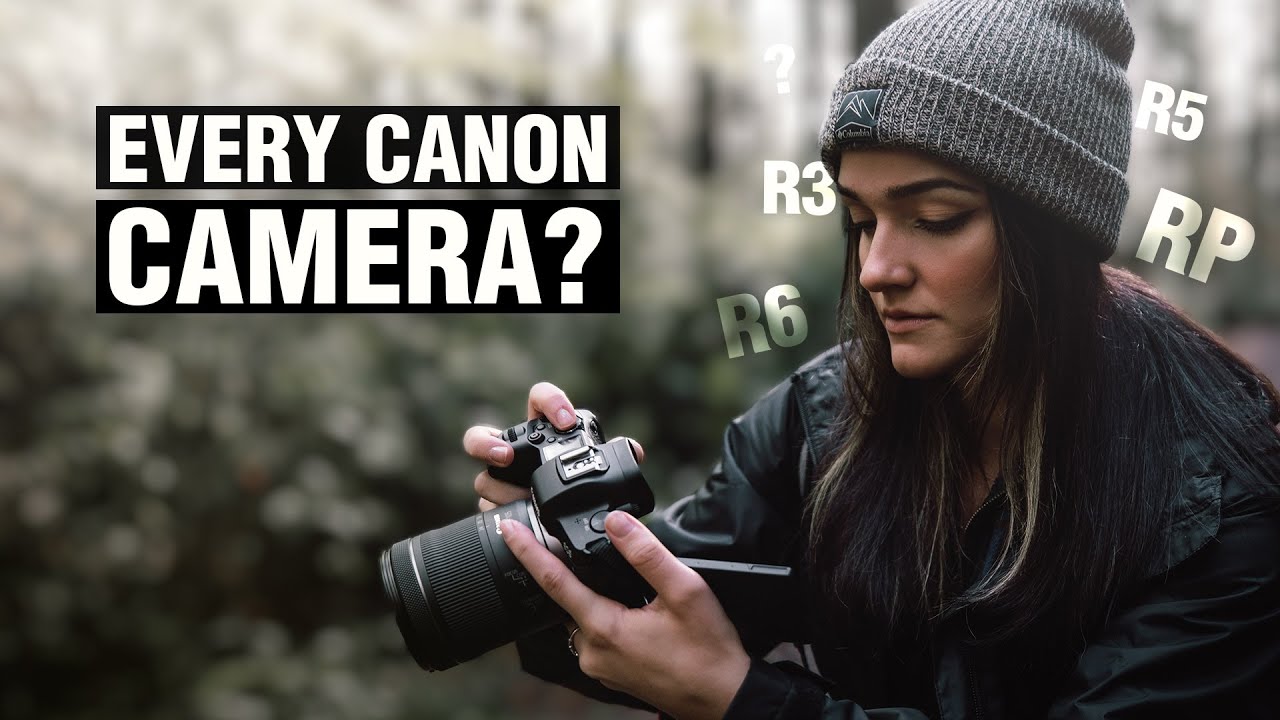
This image is property of i.ytimg.com.
EOS R5
High-resolution flagship stills and hybrid capabilities
The R5 is Canon’s high-resolution hybrid flagship—serious about stills and nearly as committed to cinema-style video. It feels like a camera designed by people who wanted one tool to do everything at a professional level.
Key image and video features that define the model
You get a high-megapixel sensor, excellent IBIS, and advanced autofocus with animal and subject recognition, plus 8K internal recording—features that change how you plan shoots and edit footage. It’s demanding but rewarding.
Strengths for professional photographers and creators
Its image quality, autofocus, and video options make it a workhorse for wedding photographers, commercial shooters, and content creators who need a single camera to deliver across formats. You feel the capability in every shoot.
Thermal behavior and practical shooting limits
The R5 can overheat with sustained high-resolution video, which forces you to be strategic about recording times and workflows. In practice, you learn to manage settings, use short clips, or employ external recorders to avoid downtime.
Lens choices for maximizing the camera’s potential
Pair it with high-quality RF primes and fast zooms to exploit resolution and AF—lenses that resolve detail and match the body’s speed are worth the investment. Canon’s RF line and select adapted EF glass give you flexibility.
Who should buy the R5 and who might choose something else
Buy the R5 if you need top-tier stills and serious video in one body; choose the R6 if you prioritize low-light speed over resolution, or the R5 C if your focus is cinema-grade video. Your workload determines the right fit.
How it compares to R5 C and R6 in real-world use
Compared with the R5 C, the R5 is more of a stills-first hybrid with limited continuous cinema recording; compared with the R6, it trades low-light advantage for resolution. In daily use, the R5 feels like a precision instrument, not an all-purpose tool.
EOS R6
Designed for low-light performance and speed
The R6 is tuned around sensitivity and speed—built for shooting where light is scarce and subjects move fast. It’s the camera you reach for when you need reliable results in unpredictable conditions.
Sensor characteristics and image quality profile
Its lower-megapixel sensor favors larger pixels and cleaner high-ISO performance, producing images that are forgiving and smooth without begging for noise reduction. You’ll appreciate the balance between detail and low-light usability.
Autofocus, IBIS, and handling for fast action
Autofocus is fast and intelligent, IBIS is effective, and the handling supports quick reactions—together they make shooting sports, weddings, and events feel manageable. The camera’s responsiveness matters when moments are fleeting.
Ideal users: wedding, event, and low-light shooters
If you photograph ceremonies, concerts, or indoor sports, the R6 often outperforms higher-res bodies because it delivers usable files straight out of the camera. It’s a pragmatic choice for professionals who need consistency.
Trade-offs versus the R5 and budget alternatives
You trade resolution and some video features for better low-light performance and lower cost relative to the R5; compared to budget alternatives, the R6 still offers superior autofocus and build. It strikes a sensible middle ground.
Recommended lenses for portraits, sports, and travel
A fast 24–70 for general work, a 70–200 for action, and a fast 50mm or 85mm for portraits will cover most needs; pair with lighter primes for travel and street work. These lenses let the R6’s speed and stabilization shine.
Upgrade paths and resale value considerations
The R6 holds value reasonably well, and upgrading to the R6 Mark II or R5 is a clear step if you want more resolution or video; keep receipts and condition tidy to maximize resale. The market tends to favor well-maintained bodies.
EOS R6 Mark II
What Canon improved from the original R6
The Mark II refines speed, resolution, and video—Canon bumped up megapixels and burst performance while keeping the R6’s low-light strengths. It’s an iterative but meaningful upgrade if you feel constrained by the original R6.
Resolution and speed changes that matter to shooters
You gain higher resolution for cropping and detail work plus faster burst rates for action sequences, which broadens the R6’s utility. Those changes matter if you often need extra detail without sacrificing speed.
Video enhancements and workflow implications
Video got thoughtful updates: improved codecs, frame rates, and heat management that simplify hybrid workflows. You’ll spend less time juggling clips and more time actually shooting.
Autofocus and burst performance improvements
AF tracking is more robust and burst shooting is quicker and longer, so you capture decisive moments with greater confidence. That reliability turns uncertain shoots into predictable results.
Who benefits most from upgrading to the Mark II
You should consider upgrading if you want more megapixels, better video, or longer continuous shooting than the original R6 can provide—especially if you shoot a mix of events and video. If you’re content with the R6’s specs, you may not need to upgrade.
Lens and accessory recommendations tailored to the Mark II
Stick with fast zooms and primes that complement the increased resolution—good 24–70, 70–200, and a 35mm or 50mm prime remain core. Add fast SD or CFexpress cards depending on your recording needs.
Positioning versus R6, R5, and the R7 in the lineup
The Mark II sits between the original R6 and R5: more resolution and video capability than R6, but not as full-featured as R5; it competes with the R7 for speed but keeps full-frame sensibilities. It’s a versatile all-rounder.
EOS R3
Pro-oriented body with emphasis on speed and durability
The R3 feels built for the front line—rugged, fast, and confidently engineered. It’s the kind of camera you trust in harsh environments or when you need relentless performance without compromise.
Stacked sensor and autofocus system designed for sports
A stacked sensor architecture and elite AF system mean you get rapid readout and subject tracking tuned for athletes and wildlife. The design choices favor speed and accuracy above mere megapixel counts.
High frame rate shooting and ergonomics for professionals
High continuous frame rates and pro-level ergonomics make long shoots and rapid-fire assignments manageable—you can shoot all day without fumbling. The body communicates reliability in your hands.
Video capability and pro video workflow integration
Video on the R3 is strong, with professional codecs and outputs that integrate cleanly into advanced workflows; it’s not just a stills camera but a hybrid that professionals can depend on. You’ll appreciate the I/O and format flexibility.
Strengths for press, wildlife, and action photographers
Its speed, autofocus, durability, and ergonomics tailor it to press, wildlife, and action work where missing a moment is costly. It’s a camera you choose when capacity to perform matters more than price.
Price point and alternatives for pros on a budget
The R3 carries a premium; for pros on tighter budgets, the R6 Mark II or high-end third-party bodies may be sensible alternatives. You pay for speed and robustness—if you don’t need them, it’s overkill.
Recommended pro lenses and accessories
Invest in pro-grade telephotos, fast zooms, and weather-sealed primes: 70–200, 100–400, and 400/500mm options are staples, plus batteries, grips, and sturdy straps. These choices let the R3 do what it was built for.
EOS R5 C
Cinema-grade hybrid design and active cooling
The R5 C is the R5 reimagined for cinema: active cooling, extended recording times, and a body that expects long takes and heavy video use. It feels like a camera that prefers filmmaking to stills.
Key video features that separate it from the R5
You get true cinema codecs, longer 8K recording windows, and a video-centric menu structure—features that matter when you need professional-level footage without constant stops. It’s tailored to filmmakers’ workflows.
Differences in stabilization and body design compared to R5
Because of its cooling and video focus, the R5 C sacrifices some IBIS tuning and stills ergonomics found on the R5, making it less ideal for photographers who shoot primarily stills. The body is rebalanced for cine accessories and extended operation.
Best use cases for filmmakers and hybrid shooters
Choose the R5 C if you make narrative films, run-and-gun documentaries, or need long, high-resolution takes while maintaining stills capability as secondary. It’s a tool for creators who prioritize video.
Audio, monitoring, and I/O advantages for video work
Expanded I/O, better audio options, and continuous power workflows make the R5 C friendly to professional sets—monitoring and sound are thought through in ways the R5 doesn’t match. You’ll find fewer adapters and workarounds necessary.
Recommended cine and hybrid lenses
Look to cinema primes and stabilized RF zooms, or adapt EF cine lenses for consistent focus breathing and geared control. Lenses that support long, repeatable takes and precise focus pulling are ideal.
How to decide between R5 C and R5 for your projects
Decide by asking whether your priority is stills or extended cinema recording: pick R5 for stills-first hybrid work, choose R5 C if video dominates and you need cinema-grade features. Your workflow will make the choice obvious.
EOS R8
Compact full-frame option: who it’s aimed at
The R8 is for you if you want full-frame quality in a compact, travel-friendly body—photographers who prioritize size and image quality over ruggedness and pro features. It’s an invitation to carry more often.
Main imaging and handling characteristics
You get commendable image quality and simplified handling, with controls that favor immediacy and ease. It’s the kind of camera that makes you enjoy shooting because it’s not burdensome.
Video strengths and any notable limitations
Video is strong for vlogging and hybrid use, with good codecs and autofocus, though it lacks the advanced cooling and pro I/O of larger cameras. For casual to serious content creation it performs well, but heavy video work will expose its limits.
Practical use cases like travel, street, and hybrid work
Because it’s light and unobtrusive, the R8 excels for travel and street photography and for creators who balance stills and video. You’ll find yourself carrying it more, and thus shooting more.
How it compares to the RP, R6, and R10 in handling/value
Compared with the RP it’s a step up in responsiveness and features; against the R6 it’s lighter but less robust; versus the R10 (APS-C) you get full-frame advantages in depth and low-light. It’s a sweet spot for size-conscious shooters.
Lens pairings for a lightweight kit
Pair small, high-quality primes like 35mm and 50mm RF options, or a compact 24–105-style zoom, to keep your kit minimal. The result is a capable, carry-everywhere setup that doesn’t ask for much commitment.
Buying advice for photographers balancing size and performance
If size matters and you still want full-frame rendering, the R8 is a balanced buy; if you need weather sealing, more robust video, or continuous high-speed shooting, consider stepping up. Try it in your hands before deciding.
EOS R50
Entry-level APS-C mirrorless geared toward creators
The R50 is Canon’s approachable APS-C offering for creators, particularly vloggers and social-media shooters who want modern features without complexity. It’s designed to get you started fast.
Key features for vloggers and social creators
You’ll appreciate flip-out screens, intuitive menus, and solid autofocus tuned for faces and eyes—features that make self-shooting and quick edits easier. It’s optimized for the workflows of social content.
Image quality expectations and ergonomics
APS-C sensor constraints mean you won’t get full-frame shallow depth or low-light headroom, but images are sharp and vibrant for web and print-sized output. Ergonomically it’s light and simple, favoring ease over long-session comfort.
Limitations compared to higher-end R-series cameras
You forgo full-frame depth, some AF sophistication, and pro video codecs, which shows if you crop heavily or demand cinematic footage. The R50 is a creative launchpad rather than a final professional tool.
Best lenses and accessories for content creation
Choose a fast 22–35mm equivalent for vlogging, a compact portrait prime, and a small zoom for travel. Add a lightweight tripod, external microphone, and spare batteries to complete a creator kit.
Who should pick the R50 and when to consider stepping up
Pick the R50 if you’re starting as a content creator and want a modern, user-friendly camera; step up when you need larger sensors, better low-light performance, or advanced video features. It’s a clear developmental path.
Price and value proposition against competitors
The R50 competes strongly on price and ease of use, offering features you’ll actually use without overwhelming complexity. If value and simplicity matter, it’s a persuasive choice.
Conclusion
Concise recap of how Canon’s mirrorless range addresses different needs
Canon’s mirrorless line maps neatly to priorities: from compact entry-level and creator-focused bodies to high-speed pro machines and cinema-oriented hybrids. There’s a model for travel, portraiture, action, and filmmaking, each tuned to different trade-offs.
Final guidance on matching your shooting priorities to a model
Decide first what you shoot most—low light and speed, high resolution, video heavy work, or portability—and pick the camera that aligns with that single priority. You’ll be happier with a camera that complements your habits than one that impresses on paper.
Next steps: hands-on testing, renting, or building a starter kit
Try them in your hands, rent before big purchases, or assemble a modest starter kit that covers your typical shoots. Practical time with a camera reveals more than specs ever will.
Resources for further learning and staying updated on new releases
Keep shooting, read reviews, and watch other creators to learn real-world workflows and updates; equipment evolves, but so will your needs. You’ll make better choices when you pair experience with careful research.