
You’re about to watch “watch this before you buy a CAMERA in 2025! Which FEATURES actually Matter?” — a clear, no-fluff guide from Aarzoo Khurana Photography that helps you focus on what matters most when picking a camera. It speaks directly to your needs, budget, and creative goals so you can feel confident in your choice.
The video breaks down mirrorless vs DSLR, essential specs like sensor size and autofocus, and specialty tips for wildlife and other genres, plus practical buying steps to match gear to the way you shoot. You’ll get honest, experience-based advice and easy comparisons so you can skip the confusion and buy with confidence.
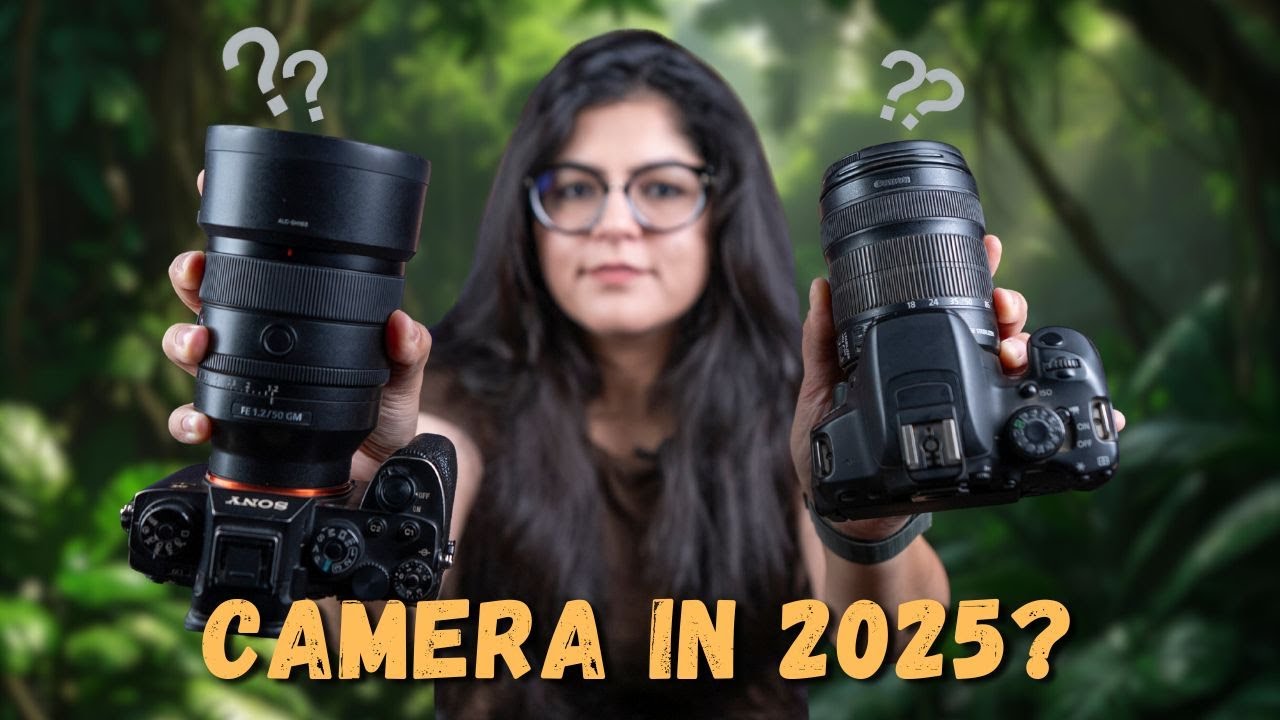
This image is property of i.ytimg.com.
Decide your primary purpose before you shop
You should begin by deciding why you need a camera at all, because that purpose will quietly rearrange everything else — the mount you learn to love, the lenses you’ll keep, the bag that lives on your shoulder. Buying a camera is less like acquiring a neutral tool and more like choosing a companion for the next few years of work and play, so take a moment and be honest about what you’ll actually do with it.
Determine whether your focus is stills, video, or hybrid work
If you mainly shoot stills, you’ll prioritise resolution, dynamic range, and lens choices; if you’re leaning toward video, you’ll look for clean codecs, reliable auto-exposure, and rolling-shutter behaviour. Hybrid systems exist and are ever better, but they often require compromises — maybe a camera that shoots gorgeous RAW stills but has limited continuous recording, or a cine-capable body with a smaller sensor that still gives you excellent footage. Think about your end product: are you printing large, uploading daily, or delivering edited video? That answer changes everything.
Identify genre priorities like portrait, landscape, wildlife, sports, travel, or vlogging
Your genre choices narrow down the lenses and features you’ll prioritise: portraits reward fast primes and reliable eye AF; sports and wildlife demand fast continuous AF and long telephotos; travel values portability and a versatile zoom, while landscape often points you toward high resolution and dynamic range. You don’t need to pigeonhole yourself forever, but you should identify a primary discipline so your first set of glass and accessories isn’t an unfocussed scatter of potentially incompatible gear.
Decide how much you prioritise portability versus ultimate image quality
There’s a constant tension between portability and ultimate image quality — larger sensors and professional bodies usually deliver better noise performance and dynamic range, but they’re heavier, more expensive, and invite more lenses into your kit. If you’ll be walking for hours, hauling a full-frame body plus three lenses might become a source of regret; if you sit in a studio or drive between locations, weight matters less. Be pragmatic: the nicest camera you never take out is worse than a modest one you love.
Set realistic creative goals and growth plan for the next 3–5 years
Think about where you want your photography or filmmaking to be in three to five years. Do you aim to sell prints, book commercial work, grow a YouTube channel, or simply make better images for yourself? Your goals inform whether you should invest now in a higher-end body and lenses, or start smaller and allocate budget to education and shooting time instead. Growth plans also help you choose a system with room to expand; if you expect to pivot into weddings or wildlife, make sure the mount you pick has the lenses you’ll need.
Establish a firm budget that includes lenses and accessories, not just the body
Set a budget that includes lenses, memory cards, backups, a bag, possibly an external recorder or microphone, and insurance — the body is rarely the most expensive long-term part of a kit. Lenses generally outlast bodies and often retain value, so you should allocate a significant portion of your budget to glass. Otherwise you’ll find yourself upgrading bodies while shooting through cheap optics, and that mismatch is the quiet disappointment of many photographers.
Sensor format and size: full-frame, APS-C, MFT, and medium format
You should understand that sensor size isn’t just a spec on a sheet; it changes how images feel, how lenses behave, and how heavy your kit becomes. Picking a sensor format early will guide lens choices and your expectations for depth of field, low-light capability, and dynamic range.
Understand how sensor size affects depth of field, low-light performance, and dynamic range
Larger sensors generally give you shallower depth of field at equivalent focal lengths and apertures, which is desirable for portraits and cinematic video. They also typically perform better in low light and offer wider dynamic range, letting you recover shadows and preserve highlights more easily. Smaller sensors can still produce beautiful images and force you to think differently about composition, but you should accept the trade-offs in background separation and marginally higher noise in dim conditions.
Trade-offs between larger sensors for image quality and smaller sensors for lenses/portability
You can get excellent image quality from both large and small sensors, but the balance shifts: full-frame or medium format bodies bring better high-ISO performance and tonal graduations, while APS-C and MFT systems give you smaller, lighter lenses and more reach for telephoto work. For travel and documentary work, a smaller system may keep you shooting all day; for studio portraits or large prints, the heavier system might be worth the effort.
How crop factor changes effective focal length and field of view
Remember that the focal length written on a lens doesn’t change, but the sensor sees a cropped portion of the scene on smaller sensors, effectively multiplying the focal length by a crop factor. That’s beneficial if you need extra reach for wildlife, but frustrating if you want true wide-angle coverage without very short focal lengths. You’ll need to think in terms of field of view, not just lens markings, when planning your kit.
Medium format benefits and limitations for studio and landscape work
Medium format sensors offer exquisite tonality, very high resolution, and a distinct rendering that’s hard to replicate. They excel in controlled environments — studio, high-end commercial, and landscapes where you want every nuance. But medium format brings heavier gear, higher cost, slower frame rates, and a lens ecosystem that’s less about speed and more about precision. It’s a deliberate choice for a specific creative trajectory.
Considerations for lens availability and size per sensor format
Two things will shape your long-term happiness: whether the mount has the lenses you need and whether those lenses are physically practical for you. Some systems offer compact, affordable primes; others have expensive, large telephotos and specialty glass. Investigate the native lens line-up and third-party options — if you can’t get the lenses you want in that mount, the sensor advantages won’t matter much.
Resolution and pixel size: megapixels versus real-world detail
Resolution numbers are seductive. Higher megapixels promise more detail, but they also demand more from your lens, processor, storage, and technique. You should match megapixel count with your intended output and shooting style.
When more megapixels matter and when they don’t
More megapixels matter if you plan large prints, heavy cropping, or detailed commercial work like product photography or landscapes where you want to inspect every rock. They’re less important for social media, editorial work with limited print sizes, or fast-moving genres where high frame rates and low-light performance may matter more than sheer pixel count.
Importance of pixel size for low-light performance and highlight roll-off
Bigger pixels generally gather more light and exhibit better signal-to-noise ratios, improving low-light performance and the aesthetic of highlight roll-off. A 20–24MP full-frame sensor with large pixels can outperform a denser 45MP sensor at high ISO in some situations. Think about whether you’ll be pushing ISO often; if so, pixel size deserves attention.
Practical limits: file size, storage, processing power, and high-resolution workflows
High-megapixel files are heavy. They increase backup time, require faster cards and drives, and strain your editing workstation. If you shoot hundreds of RAWs in a session, those gigabytes add up and slow you down. High-res sensors are brilliant, but they require you to adapt your workflow to handle larger files without resentment.
Oversampling benefits for downsampling noise reduction and sharpening
Oversampling — shooting at very high resolution then downsampling for output — can yield cleaner, sharper images because averaging reduces noise and increases apparent detail. If you often produce web-sized or magazine images, a high-megapixel file downsampled judiciously can look spectacular. That said, oversampling only helps if you can get steady shots and use quality optics.
Use cases that justify 40MP+ sensors and those better served by 20–30MP
If you sell large fine art prints, do high-end landscape panoramas, or need extreme cropping, 40MP+ sensors make sense. If you’re shooting events, street, documentary, or much of portraiture where speed, high ISO, and lower file size matter, a 20–30MP sensor is often the smarter balance.
Dynamic range and low-light performance
Dynamic range and low-light capability are the quiet backbone of many great images. They determine how much you can rescue from a shadow, how forgiving exposure mistakes are, and how natural gradients in light appear.
Why dynamic range is crucial for landscapes, RAW recovery, and high-contrast scenes
Landscapes and high-contrast scenes present bright highlights and deep shadows; wider dynamic range lets you retain detail across that span without resorting to heavy processing or blended exposures. When you shoot RAW you rely on sensor headroom to pull subtle details from shadow or recover clipped highlights. A camera with generous dynamic range simply gives you more creative latitude.
Native ISO behavior and usable ISO ranges for different sensor types
Every sensor has a “native” or base ISO where its dynamic range is optimum. Beyond that, noise increases and shadow detail degrades. Understand a body’s usable ISO range in practice, not just on paper — manufacturers sometimes quote impressive maximum ISOs that are of limited practical use. Test or read real-world reviews to know where the camera remains clean enough for your needs.
Real-world tests to evaluate shadow recovery and highlight clipping
Perform or consult shadow recovery and highlight clipping tests: underexpose slightly and see how much noise shows when you lift shadows, or deliberately expose for highlights and see what detail is recoverable. These tests reveal more than spec sheets because firmware, RAW converters, and sensor design all affect how well detail survives post-processing.
Impact of in-camera noise reduction and RAW converters on final image quality
In-camera noise reduction can make JPEGs look pleasant, but it can also smooth fine detail. RAW converters differ in demosaicing and noise algorithms, so your final image quality depends on both the sensor and the tools you use. Try the camera with your preferred workflow in mind; the pairing matters.
How to balance exposure to protect highlights while retaining shadow detail
A practical rule is to expose to protect highlights (the ETTR — expose to the right — principle) while avoiding clipped highlights, then recover shadows if necessary. You’ll find a sweet spot where you preserve highlight detail and keep noise manageable in shadows; that sweet spot changes with sensor behavior, so learn the limits of your camera.
Autofocus systems: speed, accuracy, and subject detection
Autofocus is the silent collaborator that either lets you concentrate on framing and timing or pulls your attention into frustration. The best AF systems are fast, accurate, and adapt to what you’re shooting.
Types of AF systems: phase detection, contrast detection, and hybrid implementations
Phase-detection AF is fast and suited to tracking, contrast-detection can be highly accurate but slower, and hybrid systems combine both to gain speed and precision. Most modern mirrorless cameras use on-sensor phase detection pixels, giving you wide coverage and effective tracking. Know what system your camera uses and how it performs in the scenarios you care about.
Key autofocus features to look for in 2025: eye AF, head/torso detection, animal/bird tracking, vehicle tracking
By 2025 you should expect strong subject-detection features: reliable eye AF for people, head and torso detection for more flexible portrait composition, and specific animal or bird tracking for wildlife. Vehicle tracking and sports-focused modes are also mature and useful. These features change how you shoot, letting you focus more on narrative than technical gestures.
AF point coverage and how it affects composition freedom
A wide AF point coverage means you can place focus off-centre without recomposing, which matters for dynamic framing. If AF points are crowded in the centre, you’ll be limited or forced to focus-and-recompose, which can slow you and introduce errors in shallow depth-of-field situations. Look for bodies with broad, dense AF coverage.
Continuous AF performance for action and wildlife: tracking reliability and re-acquisition
For action and wildlife, continuous AF must lock and follow erratic subjects, sometimes through foliage or against changing backgrounds. A camera that re-acquires quickly after obstruction or lost frames will save you many missed shots. Pay attention to real-world tests rather than only burst rates.
Customization options, AF algorithms, and focus modes that matter in practice
Customization — sensitivity, tracking speed, AF area modes — matters because different subjects need different behaviours. The best bodies let you tweak algorithms and save user profiles so you can switch quickly between portrait, sports, and wildlife setups. These options turn a capable AF system into a flexible tool.
Image stabilization: IBIS, OIS, and sensor-lens cooperation
Stabilization frees you from always needing a tripod and expands handheld possibilities for both stills and video. How it’s implemented — in the body, in the lens, or both — affects results.
Differences between in-body stabilization and lens stabilization
IBIS (in-body image stabilization) moves the sensor to compensate for shake and works with any lens, making it versatile. OIS (optical stabilization) in lenses can be tuned for focal length and sometimes offers better stabilization at extreme telephoto ranges. Some systems combine both for optimum performance.
How IBIS + OIS synergy improves handheld shooting for stills and video
When IBIS and OIS cooperate effectively you get more effective stops of compensation than either alone, and that helps for low-light handheld stills and smooth video pans. The best systems coordinate movements so the lens focuses on long-term drifts and the body corrects finer shakes.
Practical stops of stabilization to expect for telephoto, standard, and macro lenses
Expect different results by focal length: standard lenses might yield 4–6 stops of improvement, telephotos less because of amplification of movement, and macro work is tricky because tiny camera movements matter much more. Don’t assume the same number of stops applies across the board — test with your own kit.
Stabilization impacts on AF performance and rolling shutter
Good stabilization can improve AF by allowing steadier framing and fewer microadjustments. However, aggressive IBIS movement sometimes interacts poorly with electronic shutters, increasing visible rolling shutter or odd artifacts in video. You’ll need to test combinations of shutter types, stabilization on/off, and AF modes for your work.
Testing stabilization in the field: panning, low shutter speeds, and vertical/horizontal movement
Field tests are simple and instructive: try long handheld exposures of static scenes, intentional panning for track shots, and hand-held telephoto shots at low shutter speeds. Pay attention to vertical vs horizontal movement, as some systems handle axes differently. Your practical experience will tell you whether the stabilization really lets you ditch the tripod.
Lens ecosystem and mount longevity
Lenses are your long-term investment; they often outlive camera bodies and shape the aesthetics of your work. Choose a mount with a future, not a one-off body.
Why lenses often matter more than camera bodies for long-term image quality
A high-quality lens resolves detail, controls aberrations, and defines the character of your images. Bodies will evolve with better sensors and firmware, but a good lens continues to contribute. Investing in glass is investing in your future output.
Evaluate current native lens lineup and the manufacturer’s roadmap
Check what lenses are available now and what’s planned. A manufacturer with a steady roadmap and a broad range of fast primes, useful zooms, and specialty glass is more likely to support your growth. Absence of critical focal lengths or long gaps in the lineup can become constraints.
Third-party lens support and availability of adapted legacy glass
Third-party manufacturers and adapter ecosystems can fill gaps, often with very attractive price-to-performance ratios. Legacy lenses, when adapted, can give you unique rendering and cost savings, but check autofocus and stabilization compatibility. A mount with strong third-party support is practical and resilient.
Considerations for specialized glass: fast primes, telephoto reach, tilt-shift, macro
If your work needs fast low-light primes, long reach telephotos, tilt-shift lenses for architecture, or high-quality macro optics, ensure those are stable in the ecosystem. Specialty glass can be expensive and heavy, so plan for how you’ll transport and insure it.
Resale value and cross-system compatibility when planning upgrades
Think about resale: lenses from strong systems tend to hold value better. Also consider whether you might want to move systems in the future and how that affects compatibility and resale. Buying with an eye toward future flexibility can save you money and frustration.
Video features that actually matter in 2025
Video has matured; you should focus on features that affect real-world production, not just spec wars. Think about the end-to-end process of shooting, monitoring, and editing.
Resolution and frame rates that matter: 4K at high bitrates, 6K/8K trade-offs
4K at high bitrates remains practical for most creators, balancing quality and manageable files. 6K/8K can be useful for heavy cropping, reframing, or future-proofing, but they dramatically increase storage and processing needs. Choose resolution based on your delivery platform and editing capacity.
Codecs, bit depth, intra-frame versus inter-frame compression, and editing implications
Codecs affect editing fluidity and color grading. Intra-frame codecs (All-I) are easier to edit frame-by-frame, while inter-frame codecs (long-GOP) are more efficient but heavier on CPUs during editing. Higher bit depth gives you more grading latitude. Consider your workflow and whether you’ll use external recorders to capture higher-quality codecs.
Log profiles, LUTs, and high dynamic range recording options
Log profiles retain more dynamic range and are essential if you plan heavy color grading; LUTs help you visualise a grade during production. HDR recording is increasingly important for platforms that support it, but it complicates monitoring and delivery. If your projects need cinematic looks, pick a camera with good log and HDR options.
Rolling shutter, overheating limits, and continuous recording times
Rolling shutter affects fast motion and can ruin otherwise good footage; look for cameras with low readout times if you shoot handheld action. Overheating and recording limits are practical constraints — a camera that cuts out mid-shoot is useless. Check sustained recording tests and whether the camera allows external power and external recorders to bypass limits.
Audio inputs, headphone monitoring, clean HDMI output, and external recorder support
Good audio is non-negotiable for most video work. Mic inputs, headphone jacks, and clean HDMI enable better production. Clean outputs and external recorder support are essential if you need higher bitrates or longer takes. Consider whether you’ll mic subjects, record sound separately, or rely on on-camera audio.
Connectivity, workflow and software integrations
A camera that fits into your workflow will save you time and preserve creativity. Connectivity and software integration are the invisible tools that keep your shoots moving.
Tethering options for studio work: wired and wireless reliability
Wired tethering is reliable and fast for studio shoots; wireless can be convenient but is often less stable and slower. If you regularly tether, test the reliability of the camera’s tethering protocol with your software and platform. Robust tethering improves client feedback and speeds up critical workflows.
In-camera RAW editing, on-the-go JPEG processing, and mobile transfers
Some cameras allow basic in-camera RAW edits, quick JPEG processing, and fast transfers to phones for social sharing. These features are useful on the run, but don’t replace a desktop workflow. Think how much you value immediate deliverables versus careful post-production.
Cloud backup and automatic upload features for fast workflow
Automatic uploads and cloud backups can be lifesavers if you’re in the field and want redundancy. They also speed collaboration with clients or editors. But they require good connectivity and may raise privacy or security concerns, so weigh convenience against control.
Smartphone remote control, metadata syncing, and GPS tagging
Smartphone control simplifies remote shooting and monitoring, while metadata syncing and GPS tagging help organisation. These features are small conveniences that accumulate into a much smoother workflow, especially if you manage large volumes of files across shoots.
Compatibility with popular editing software and tethering protocols
Ensure your camera’s files and tethering protocols play well with the editing software you use. Proprietary or obscure formats can introduce friction and extra conversion steps. A camera that integrates smoothly with your software saves time and keeps your creative momentum.
Conclusion
You should prioritise how a system performs for you in real situations rather than chasing headline specs; a camera’s usefulness is measured in the images you actually make, not the numbers on a box. Choose a system aligned with your creative goals, budget, and a realistic growth plan.
Prioritize real-world performance and ecosystem over flashy specs and marketing
Marketing promises are tempting, but real-world performance and a healthy ecosystem will serve you longer. Look for systems with lenses you need, reliable autofocus, and a supportive community.
Choose a system that aligns with your shooting goals, budget, and long-term growth
Match your purchase to where you want to go creatively. If you expect to grow into new genres, choose a mount that supports that transition without forcing you into repeated wholesale upgrades.
Test thoroughly, factor in lenses and accessories, and consider used or rental options
Rent or borrow before buying when possible; hands-on testing reveals practical issues that specs don’t. Factor lenses, cards, backups, and accessories into your budget, and consider good used glass as a cost-effective way to build a kit.
Remember firmware and support can extend a camera’s usefulness beyond initial specs
Manufacturers often add meaningful features through firmware updates, and good customer support can keep a system viable for years. Don’t judge a system only by the day you unbox it; consider its potential to improve.
Buy with intent: the right camera in 2025 is the one that helps you make better images, not just the one with the most features
Ultimately, the best camera is the one you use. Choose equipment that removes friction from your process and lets you focus on making work you care about. If you buy with intent, your gear becomes a quiet enabler rather than an ongoing source of desire.